AquaSage
Species library

Strawberry Rasbora

Boraras naevus

Danionidae
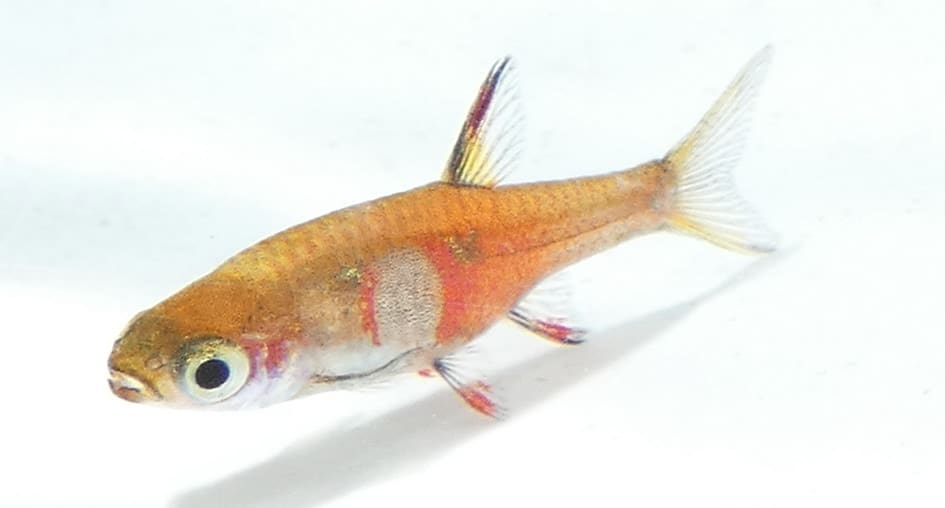
FishDifficulty: ●●●○○Data: verified
Strawberry Rasbora — Boraras naevus
📷 Andrew Bogott · CC BY-SA 4.0 · resized · Wikimedia Commons

About

Described as recently as 2011, the strawberry rasbora is a true nano cyprinid known only from the peat swamps, marshes and paddy margins of the lower Tapi drainage in peninsular Thailand, where the water is shallow, still, soft and stained brown with tannins. It barely reaches 2 cm: a warm pinkish-red fish carrying one bold round blotch in the middle of the flank, dramatically enlarged in males, with smaller marks near the anal fin and the tail base. Unlike the closely traded chili rasbora it has no red lateral line at all, and unlike the dwarf rasbora that front blotch differs sharply between the sexes. It is peaceful to the point of timidity, drifting in loose shoals through fine-leaved plants, and males only fire up their best colour when there are enough rivals around to compete with.

Care

Give a mature, densely planted, dimly lit tank of at least 40 litres with a 45 cm footprint, soft acidic tannin-stained water at 24-27 C and barely perceptible flow. Keep 10 or more together, add floating plants and leaf litter for shade, and choose only equally tiny, placid tankmates - anything that fits a 2 cm fish in its mouth will eventually try. Avoid mixing with other Boraras species, which can hybridise, and never add this fish to an immature tank as it reacts badly to swings in chemistry.

Diet

Feed micro-sized food only: crushed flake, micro-granules, cyclops, newly hatched brine shrimp, microworms and small daphnia. Daily live or frozen fare brings out the red and triggers spawning; dry food alone will not keep them in condition.

Tankmate compatibility

Gets along with (32)

Possible with care (119)

African Butterfly CichlidAgassiz's CoryAltum AngelfishAmano ShrimpBamboo ShrimpBanjo CatfishBetta (Siamese Fighting Fish)Black Skirt TetraBlackline RasboraBladder SnailBlood Parrot CichlidBloodfin TetraBlue AcaraBlue Tiger ShrimpBlue Velvet ShrimpBoesemani RainbowfishBolivian RamBorneo SuckerBrichard's TeleogrammaBristlenose PlecoBronze CorydorasBuenos Aires TetraBuffalohead CichlidButterfly Hillstream LoachCelestial Pearl DanioCheckerboard CichlidCheckered BarbCherry BarbCherry ShrimpChinese Algae EaterChocolate CichlidChocolate GouramiClown KillifishClown PlecoCochu's Blue TetraCongo TetraConvict CichlidCrystal Red ShrimpDenison BarbDiscusDoctor FishDojo (Weather) LoachDwarf Chain LoachDwarf Flag CichlidDwarf GouramiDwarf Neon RainbowfishDwarf Orange CrayfishDwarf Pea PufferElephantnose FishEllioti CichlidEmerald CoryFestivum (Flag Cichlid)Firemouth CichlidFlame TetraForktail RainbowfishFreshwater ClamGerman Blue RamGhost ShrimpGlass CatfishGlowlight DanioGold BarbGolden Dwarf CichlidGreen DiscusHeckel DiscusHoney GouramiJapanese Trapdoor SnailJulii CoryKeyhole CichlidKissing GouramiKribensisKuhli LoachLeopard DanioLittle CorydorasMedaka RicefishMoonlight GouramiNeon TetraOdessa BarbOtocinclusPanda CorydorasParaguay EartheaterPearl DanioPearl GouramiPeppered CorydorasPolka Dot LoachPort CichlidPygmy CorydorasRainbow CichlidRainbow SharkRed Whiptail CatfishRed-Tail SharkRedhead CichlidReticulated Hillstream LoachRosy BarbRubber Lip PlecoSalt and Pepper CoryScarlet BadisScissortail RasboraSeverumSiamese Algae EaterSilver Tip TetraSparkling GouramiSterbai CorydorasSveni EartheaterT-Bar CichlidThai Micro CrabThick-lipped GouramiThreadfin AcaraThree-spot GouramiTiger BarbUaru (Triangle Cichlid)Umbrella Dwarf CichlidUpside-down CatfishVampire ShrimpVenezuelan CoryWhite Cloud Mountain MinnowX-ray TetraYoyo LoachZebra DanioZebra Pleco

Avoid (120)

Acei CichlidAdonis PlecoAfrican ButterflyfishAngelfishAssassin SnailAuratus CichlidBala SharkBlack Moor GoldfishBlue Dolphin CichlidBorleyi (Redfin Hap)Brevis Shell DwellerBrichardi (Fairy Cichlid)Bumblebee CichlidBumblebee GobyCalvus CichlidCelebes RainbowfishClown LoachCobalt Blue ZebraColombian Ramshorn SnailComet GoldfishCommon GoldfishCommon PlecoCompressiceps CichlidCuckoo CatfishCylindricus CichlidCyprichromisDemasoni CichlidDemon EartheaterDogtooth CichlidDuboisi TropheusDwarf Petricola CatfishElectric Blue AhliElectric Yellow LabElongate MbunaEndler's LivebearerEndlicheri BichirEven-spotted SynodontisFantail GoldfishFeatherfin SqueakerFigure-8 PufferFive-bar CichlidFrontosaGoby CichlidGolden JulieGolden Wonder KillifishGreen Spotted PufferfishGreen TerrorGuppyHongi CichlidIridescent SharkJack DempseyJaguar CichlidJewel CichlidJohanni CichlidKenyi CichlidKoiLeast KillifishLemon CichlidLivingstoniMaingano CichlidMalawi EyebiterMalawi HawkMalaysian Trumpet SnailMarlieri CichlidMasked JulieMollyMultifasciatus Shell DwellerMystery SnailNerite SnailOcellatus Shell DwellerOranda GoldfishOrnate BichirOscarParadise FishPeacock BassPeacock CichlidPictus CatfishPike CichlidPlatyPowder Blue CichlidRabbit SnailRamshorn SnailRanchu GoldfishRed DevilRed EmpressRed RainbowfishRed TerrorRed Zebra CichlidRegan's JulieReticulated Flying FoxRostratusRosy Red MinnowRoyal PlecoRusty CichlidRyukin GoldfishSailfin MollySailfin PlecoSalvini CichlidSand-sifting XenotilapiaSaulosi CichlidShubunkin GoldfishSilver ArowanaSilver MoonySimilis Shell DwellerSpotted HoploStar SapphireStriped Raphael CatfishSulawesi Cardinal ShrimpSunshine PeacockSwordtailTaiwan Reef CichlidTelescope GoldfishTexas CichlidThreadfin PetrochromisTropheusTurquoise RainbowfishVenustus (Giraffe Cichlid)Wolf CichlidWrestling HalfbeakZebra Mbuna

Computed by the AquaSage engine for a spacious reference tank — always check the full verdict for your exact setup in the calculator.

Telling males from females

What works for this species, most reliable first.

  • Belly depthA hint only · only on well-fed adults, and only as a comparison

    For most tetras, barbs and rasboras this is all there is: a conditioned female is deeper through the belly than a male of the same length.

All the methods, with diagrams

Also in these lists

Frequently asked questions

What tank size does a Strawberry Rasbora need?
A Strawberry Rasbora needs an aquarium of at least 40 litres (10.6 US gallons) with a footprint at least 45 cm (17.7 in) long — for this species, swimming length matters as much as raw volume.
What water parameters does a Strawberry Rasbora need?
Strawberry Rasbora does best at 20–28 °C (68–82.4 °F), pH 4–7 and a general hardness of 1–10 °dGH.
What group size does a Strawberry Rasbora need?
Strawberry Rasbora is a social species — keep a group of at least 10 so natural behaviour emerges and stress stays low.
Is the Strawberry Rasbora suitable for beginners?
Strawberry Rasbora sits in the middle of the difficulty scale — manageable for a careful beginner who has done the reading, but it has specific needs worth researching first.

Sources

Water & tank

Temperature20–28°C
Optimal temp.24–27°C
pH4–7
Hardness (GH)1–10°d
Carbonate (KH)0–5°d
Adult size2 cm
Min. volume≥ 40 L
Min. tank length≥ 45 cm
Group size≥ 10
Swimming zoneMid
TemperamentPeaceful
Water typeFreshwater
FlowLow
Lifespan~5 yrs
Try in the calculator