AquaSage
Species library

Cyprichromis

Cyprichromis leptosoma

Cichlidae
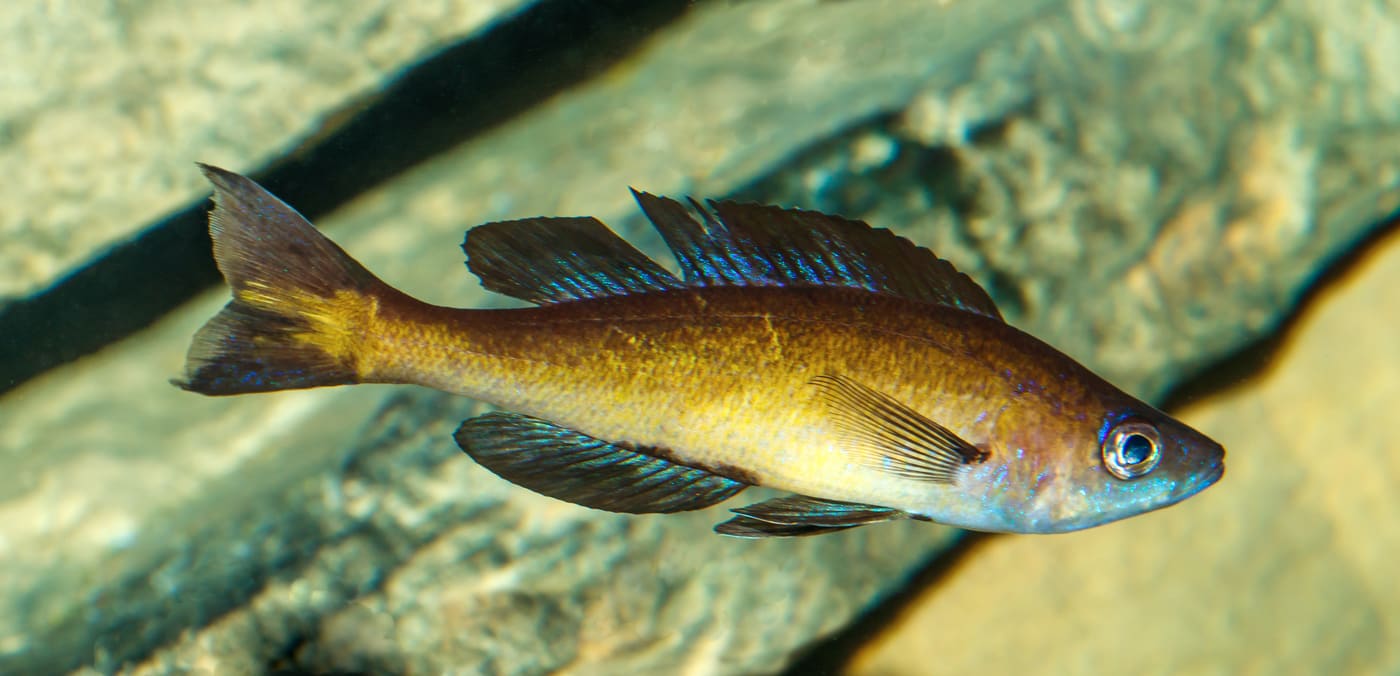
FishDifficulty: ●●●○○Data: well-established
Cyprichromis — Cyprichromis leptosoma
📷 H. Zell · CC BY-SA 3.0 · resized · Wikimedia Commons

About

Cyprichromis leptosoma is a slender, open-water shoaling cichlid endemic to Lake Tanganyika, where huge schools hover in the mid-water above rocky slopes picking drifting zooplankton. Unusually peaceful for a cichlid, it lives in loose colonies where the colourful males flash blue and yellow finnage to court females, which brood their eggs in the mouth. It needs a long, tall tank of hard, alkaline water and the security of a large group.

Care

Keep a shoal of 8 or more in a long, well-covered tank of hard, alkaline water (pH ~8.5) at 24-26 C with open swimming space above the rockwork. Nervous jumpers, so a tight lid is essential.

Diet

Zooplankton micropredator that feeds in open water; give frequent small portions of frozen or live cyclops, daphnia and baby brine shrimp plus fine dry foods, never oversized items.

Tankmate compatibility

Gets along with (19)

Possible with care (107)

Acei CichlidAgassiz's CoryAssassin SnailAuratus CichlidBetta (Siamese Fighting Fish)Bladder SnailBlood Parrot CichlidBloodfin TetraBlue AcaraBoesemani RainbowfishBuenos Aires TetraBuffalohead CichlidBumblebee CichlidBumblebee GobyButterfly Hillstream LoachCelebes RainbowfishChinese Algae EaterCobalt Blue ZebraColombian Ramshorn SnailConvict CichlidDemasoni CichlidDoctor FishDogtooth CichlidDojo (Weather) LoachDuboisi TropheusDwarf Neon RainbowfishDwarf Orange CrayfishDwarf Pea PufferElectric Blue AhliElectric Yellow LabEllioti CichlidElongate MbunaEmerald CoryEndler's LivebearerFigure-8 PufferFiremouth CichlidFive-bar CichlidForktail RainbowfishFreshwater ClamGhost ShrimpGlowlight DanioGold BarbGreen TerrorGuppyHongi CichlidJack DempseyJapanese Trapdoor SnailJohanni CichlidKenyi CichlidKissing GouramiLeast KillifishLeopard DanioLivingstoniMaingano CichlidMalaysian Trumpet SnailMedaka RicefishMollyMystery SnailNerite SnailOdessa BarbParadise FishParaguay EartheaterPeacock CichlidPearl DanioPenguin TetraPlatyPowder Blue CichlidRabbit SnailRainbow CichlidRainbow SharkRamshorn SnailRed DevilRed EmpressRed RainbowfishRed Zebra CichlidRed-Tail SharkRedhead CichlidRegan's JulieRosy BarbRusty CichlidSailfin MollySalvini CichlidSaulosi CichlidScissortail RasboraSiamese Algae EaterSilver Tip TetraSpotted HoploStar SapphireSulawesi Cardinal ShrimpSunshine PeacockSwordtailT-Bar CichlidTaiwan Reef CichlidTexas CichlidThreadfin PetrochromisThree-spot GouramiTiger BarbTropheusTurquoise RainbowfishUmbrella Dwarf CichlidVenezuelan CoryVenustus (Giraffe Cichlid)White Cloud Mountain MinnowWrestling HalfbeakX-ray TetraZebra DanioZebra Mbuna

Avoid (145)

Adonis PlecoAfrican Butterfly CichlidAfrican ButterflyfishAgassiz's Dwarf CichlidAltum AngelfishAmano ShrimpAngelfishBala SharkBamboo ShrimpBanjo CatfishBlack Moor GoldfishBlack Neon TetraBlack Phantom TetraBlack Ruby BarbBlack Skirt TetraBlackline RasboraBleeding Heart TetraBlue Tiger ShrimpBlue Velvet ShrimpBolivian RamBorneo SuckerBrichard's TeleogrammaBristlenose PlecoBronze CorydorasCardinal TetraCelestial Pearl DanioCheckerboard CichlidCheckered BarbCherry BarbCherry ShrimpChili RasboraChocolate CichlidChocolate GouramiClown KillifishClown LoachClown PlecoCochu's Blue TetraCockatoo Dwarf CichlidComet GoldfishCommon GoldfishCommon PlecoCongo Dwarf CichlidCongo TetraCrystal Red ShrimpDemon EartheaterDenison BarbDiamond TetraDiscusDwarf Chain LoachDwarf Flag CichlidDwarf GouramiDwarf RasboraElephantnose FishEmber TetraEmperor TetraEndlicheri BichirFantail GoldfishFeatherfin SqueakerFestivum (Flag Cichlid)Flame TetraFrontosaGerman Blue RamGlass CatfishGlowlight TetraGolden Dwarf CichlidGolden PencilfishGolden TetraGolden Wonder KillifishGreen DiscusGreen Neon TetraGreen Spotted PufferfishHarlequin RasboraHead-and-Tail-Light TetraHeckel DiscusHoney GouramiIridescent SharkJaguar CichlidJewel CichlidJulii CoryKeyhole CichlidKoiKribensisKuhli LoachLambchop RasboraLemon TetraLittle CorydorasMacmasteri Dwarf CichlidMalawi EyebiterMalawi HawkMarble HatchetfishMoonlight GouramiNeon TetraOranda GoldfishOrnate BichirOscarOtocinclusPanda CorydorasPeaceful BettaPeacock BassPearl GouramiPeppered CorydorasPictus CatfishPike CichlidPolka Dot LoachPort CichlidPurple Emperor TetraPygmy CorydorasRanchu GoldfishRed TerrorRed Whiptail CatfishReticulated Flying FoxReticulated Hillstream LoachRostratusRosy Red MinnowRosy TetraRoyal PlecoRubber Lip PlecoRummynose TetraRyukin GoldfishSailfin PlecoSalt and Pepper CoryScarlet BadisSerpae TetraSeverumShubunkin GoldfishSilver ArowanaSilver MoonySkunk CorySparkling GouramiSterbai CorydorasStrawberry RasboraStriped KribensisStriped Raphael CatfishSveni EartheaterTelescope GoldfishThai Micro CrabThick-lipped GouramiThreadfin AcaraThreadfin RainbowfishUaru (Triangle Cichlid)Upside-down CatfishVampire ShrimpWolf CichlidYoyo LoachZebra Pleco

Computed by the AquaSage engine for a spacious reference tank — always check the full verdict for your exact setup in the calculator.

Telling males from females

What works for this species, most reliable first.

  • Extended finsStrong · from about 8 months, and later in a suppressed male

    On many cichlids and killifish the male's dorsal and anal fins draw out into trailing points as he matures, while the female's stay rounded.

  • VentingA hint only · only on a mature fish, easiest when she is in breeding condition

    The method breeders use when the answer has to be right. Hold the fish upside down in a wet hand or soft net and look at the two openings ahead of the anal fin. The forward one is the anus; the one behind it is what you are reading.

  • Adult sizeA hint only · only across animals of the same age

    In many cichlids, catfish and loaches one sex simply grows larger — usually the male, though there are well-known reversals.

All the methods, with diagrams

Also in these lists

Frequently asked questions

What tank size does a Cyprichromis need?
A Cyprichromis needs an aquarium of at least 250 litres (66 US gallons) with a footprint at least 120 cm (47.2 in) long — for this species, swimming length matters as much as raw volume.
What water parameters does a Cyprichromis need?
Cyprichromis does best at 23–27 °C (73.4–80.6 °F), pH 7.8–9 and a general hardness of 9–25 °dGH.
What group size does a Cyprichromis need?
Cyprichromis is a social species — keep a group of at least 8 so natural behaviour emerges and stress stays low.
Is the Cyprichromis suitable for beginners?
Cyprichromis sits in the middle of the difficulty scale — manageable for a careful beginner who has done the reading, but it has specific needs worth researching first.

Sources

Water & tank

Temperature23–27°C
Optimal temp.24–26°C
pH7.8–9
Hardness (GH)9–25°d
Carbonate (KH)8–18°d
Adult size12 cm
Min. volume≥ 250 L
Min. tank length≥ 120 cm
Group size≥ 8
Swimming zoneMid
TemperamentPeaceful
Water typeFreshwater
FlowModerate
Lifespan~8 yrs
Try in the calculator