AquaSage
Species library

Banjo Catfish

Bunocephalus coracoideus

Aspredinidae
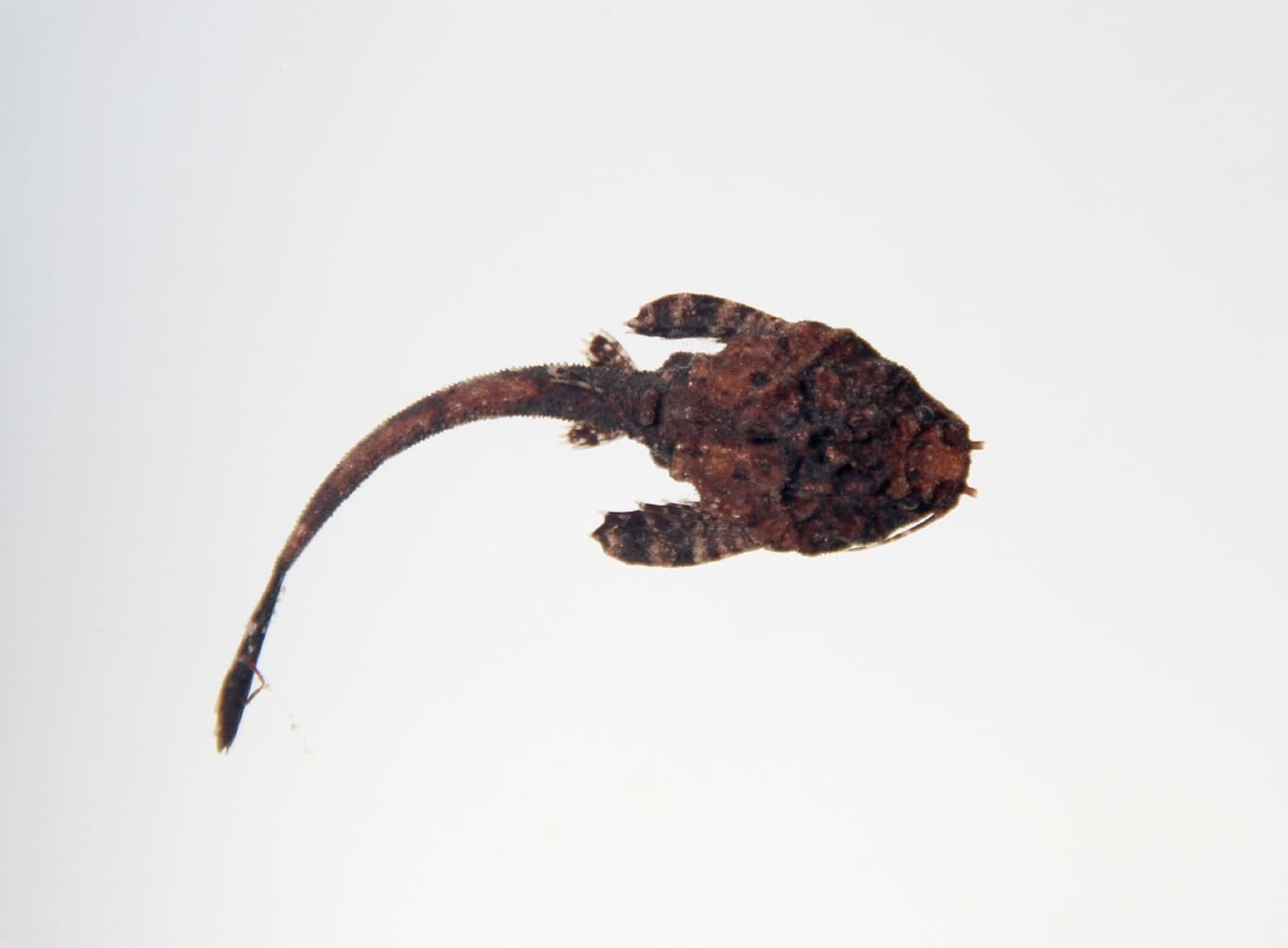
FishDifficulty: ●●●○○Data: verified
Banjo Catfish — Bunocephalus coracoideus
📷 Clinton & Charles Robertson · CC BY 2.0 · resized · Wikimedia Commons

About

The banjo catfish is a flat, leaf-mimicking oddity from Amazonian forest creeks that spends daylight buried in sand with little more than its eyes showing. Bought on impulse for its shape, it is then presumed dead for weeks at a time. It is not: it simply does not move until the lights go out. Completely harmless to tankmates of any size, it is nevertheless easily out-competed at feeding time, so fine sand, leaf litter and a deliberate after-dark feed are what actually keep one alive rather than slowly starving.

Care

Fine sand it can bury in, leaf litter and shade, gentle flow, and food delivered after lights-out. It is a slow, sedentary feeder that quicker tankmates will beat to every meal. Peaceful with everything, but do not house it with boisterous bottom feeders that will monopolise the food. Vacuum the substrate gently at water changes, because it will be under there.

Diet

Nocturnal invertebrate feeder. Frozen or live bloodworm, blackworm and chopped earthworm dropped near where it rests; check it is actually eating rather than assuming it is.

Tankmate compatibility

Gets along with (84)

Possible with care (142)

Acei CichlidAfrican ButterflyfishAgassiz's Dwarf CichlidAltum AngelfishAngelfishAssassin SnailAuratus CichlidBetta (Siamese Fighting Fish)Bladder SnailBlue AcaraBlue Dolphin CichlidBlue Tiger ShrimpBoesemani RainbowfishBorleyi (Redfin Hap)Borneo SuckerBrevis Shell DwellerBuenos Aires TetraBuffalohead CichlidBumblebee CichlidBumblebee GobyButterfly Hillstream LoachCardinal TetraCelebes RainbowfishCheckerboard CichlidCheckered BarbChili RasboraChocolate CichlidChocolate GouramiCobalt Blue ZebraColombian Ramshorn SnailConvict CichlidCrystal Red ShrimpCuckoo CatfishCylindricus CichlidDemasoni CichlidDenison BarbDiscusDoctor FishDogtooth CichlidDojo (Weather) LoachDwarf Chain LoachDwarf Orange CrayfishDwarf Pea PufferDwarf Petricola CatfishDwarf RasboraElectric Blue AhliElectric Yellow LabEllioti CichlidElongate MbunaEmber TetraEndler's LivebearerEven-spotted SynodontisFestivum (Flag Cichlid)Figure-8 PufferFiremouth CichlidFive-bar CichlidForktail RainbowfishFreshwater ClamGerman Blue RamGhost ShrimpGlowlight DanioGold BarbGolden JulieGreen DiscusGreen Neon TetraGreen TerrorGuppyHeckel DiscusHongi CichlidJack DempseyJapanese Trapdoor SnailJewel CichlidJohanni CichlidKenyi CichlidKissing GouramiLeast KillifishLemon CichlidLeopard DanioLivingstoniMaingano CichlidMalaysian Trumpet SnailMarble HatchetfishMarlieri CichlidMedaka RicefishMollyMoonlight GouramiMultifasciatus Shell DwellerMystery SnailNeon TetraNerite SnailOcellatus Shell DwellerOdessa BarbPanda CorydorasParadise FishParaguay EartheaterPeacock CichlidPearl DanioPearl GouramiPeppered CorydorasPlatyPort CichlidPowder Blue CichlidRabbit SnailRainbow CichlidRamshorn SnailRed DevilRed EmpressRed RainbowfishRed Zebra CichlidRedhead CichlidRegan's JulieReticulated Hillstream LoachRosy BarbRubber Lip PlecoRusty CichlidSailfin MollySalvini CichlidSaulosi CichlidSeverumSimilis Shell DwellerSpotted HoploStar SapphireSterbai CorydorasStrawberry RasboraSulawesi Cardinal ShrimpSunshine PeacockSveni EartheaterSwordtailT-Bar CichlidTaiwan Reef CichlidTexas CichlidThreadfin AcaraThreadfin RainbowfishThree-spot GouramiTurquoise RainbowfishUaru (Triangle Cichlid)Venustus (Giraffe Cichlid)White Cloud Mountain MinnowWrestling HalfbeakZebra DanioZebra MbunaZebra Pleco

Avoid (45)

Computed by the AquaSage engine for a spacious reference tank — always check the full verdict for your exact setup in the calculator.

Telling males from females

What works for this species, most reliable first.

  • Adult sizeA hint only · only across animals of the same age

    In many cichlids, catfish and loaches one sex simply grows larger — usually the male, though there are well-known reversals.

All the methods, with diagrams

Also in these lists

Frequently asked questions

What tank size does a Banjo Catfish need?
A Banjo Catfish needs an aquarium of at least 70 litres (18.5 US gallons) with a footprint at least 60 cm (23.6 in) long — for this species, swimming length matters as much as raw volume.
What water parameters does a Banjo Catfish need?
Banjo Catfish does best at 20–28 °C (68–82.4 °F), pH 5.8–7.8 and a general hardness of 2–20 °dGH.
Is the Banjo Catfish suitable for beginners?
Banjo Catfish sits in the middle of the difficulty scale — manageable for a careful beginner who has done the reading, but it has specific needs worth researching first.

Sources

Water & tank

Temperature20–28°C
Optimal temp.23–26°C
pH5.8–7.8
Hardness (GH)2–20°d
Carbonate (KH)1–12°d
Adult size12 cm
Min. volume≥ 70 L
Min. tank length≥ 60 cm
Swimming zoneBottom
TemperamentPeaceful
Water typeFreshwater
FlowLow
Lifespan~8 yrs
Try in the calculator