AquaSage
Species library

Emerald Cory

Corydoras splendens

Callichthyidae
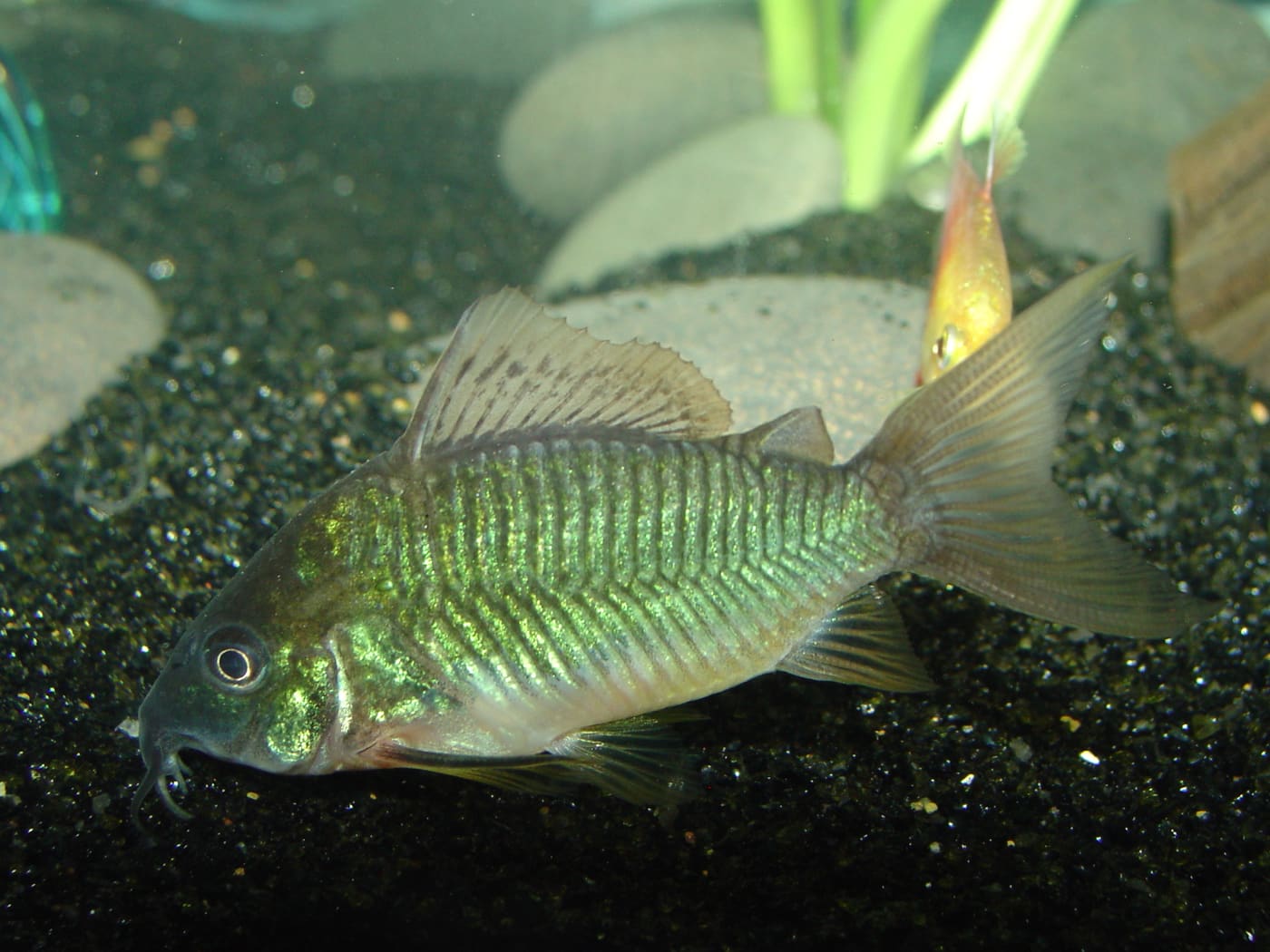
FishDifficulty: ●●○○○Data: well-established
Emerald Cory — Corydoras splendens
📷 NonstickRon · CC BY-SA 2.0 · resized · Wikimedia Commons

About

The emerald cory is a larger, deeper-bodied relative of the common Corydoras, long known under the name Brochis splendens, from the sluggish, well-vegetated waters of the western Amazon basin. Its stocky flanks shimmer with a metallic green sheen, and it is peaceful, gregarious and hardy, spending its days rooting through soft substrate in the company of its own kind.

Care

Keep a shoal of 6 or more over soft sand in a roomy, well-oxygenated tank with gentle to moderate flow and stable, near-neutral water. A hardy, peaceful bottom-dweller; provide a lid, as it gulps air at the surface.

Diet

Omnivorous substrate sifter; feed sinking pellets and wafers supplemented with frozen or live bloodworms, daphnia and brine shrimp. Soft sand lets it forage naturally without damaging its barbels.

Tankmate compatibility

Gets along with (89)

Possible with care (141)

Acei CichlidAfrican ButterflyfishAgassiz's Dwarf CichlidAltum AngelfishAngelfishAuratus CichlidBetta (Siamese Fighting Fish)Bladder SnailBlue AcaraBlue Dolphin CichlidBlue Tiger ShrimpBoesemani RainbowfishBorleyi (Redfin Hap)Borneo SuckerBrevis Shell DwellerBrichardi (Fairy Cichlid)Buenos Aires TetraBuffalohead CichlidBumblebee CichlidBumblebee GobyButterfly Hillstream LoachCalvus CichlidCardinal TetraCelebes RainbowfishCheckerboard CichlidCheckered BarbChili RasboraChocolate CichlidChocolate GouramiClown KillifishCobalt Blue ZebraColombian Ramshorn SnailCompressiceps CichlidCongo Dwarf CichlidConvict CichlidCrystal Red ShrimpCuckoo CatfishCylindricus CichlidCyprichromisDemasoni CichlidDenison BarbDiscusDoctor FishDogtooth CichlidDojo (Weather) LoachDwarf Chain LoachDwarf Petricola CatfishDwarf RasboraElectric Blue AhliElectric Yellow LabEllioti CichlidElongate MbunaEmber TetraEndler's LivebearerEven-spotted SynodontisFestivum (Flag Cichlid)Figure-8 PufferFiremouth CichlidFive-bar CichlidGerman Blue RamGlowlight DanioGold BarbGolden JulieGreen DiscusGreen Neon TetraHeckel DiscusHongi CichlidJack DempseyJapanese Trapdoor SnailJewel CichlidJohanni CichlidKenyi CichlidKissing GouramiKuhli LoachLambchop RasboraLeast KillifishLemon CichlidLeopard DanioLivingstoniMacmasteri Dwarf CichlidMaingano CichlidMarble HatchetfishMarlieri CichlidMasked JulieMedaka RicefishMollyMoonlight GouramiMultifasciatus Shell DwellerNeon TetraNerite SnailOcellatus Shell DwellerOdessa BarbPanda CorydorasParadise FishParaguay EartheaterPeacock CichlidPearl DanioPearl GouramiPeppered CorydorasPort CichlidPowder Blue CichlidRabbit SnailRainbow CichlidRed EmpressRed RainbowfishRed Zebra CichlidRedhead CichlidRegan's JulieReticulated Hillstream LoachRosy BarbRubber Lip PlecoRummynose TetraRusty CichlidSailfin MollySalvini CichlidSand-sifting XenotilapiaSaulosi CichlidSeverumSimilis Shell DwellerSpotted HoploStar SapphireSterbai CorydorasStrawberry RasboraStriped Raphael CatfishSulawesi Cardinal ShrimpSunshine PeacockSveni EartheaterSwordtailT-Bar CichlidTaiwan Reef CichlidThreadfin AcaraThreadfin PetrochromisThreadfin RainbowfishThree-spot GouramiTurquoise RainbowfishUaru (Triangle Cichlid)Venustus (Giraffe Cichlid)White Cloud Mountain MinnowZebra DanioZebra MbunaZebra Pleco

Avoid (41)

Computed by the AquaSage engine for a spacious reference tank — always check the full verdict for your exact setup in the calculator.

Telling males from females

What works for this species, most reliable first.

  • Width from aboveStrong · from about 8 months, once they are adult-sized

    Corydoras are sexed from directly above, never from the side. Look down at the group while they rest on the sand.

  • Bristles and cheek spinesA hint only · from about a year

    Male plecos grow odontodes — spiny growths on the cheeks and along the leading pectoral rays. Bristlenose males additionally grow branching tentacles across the snout and over the top of the head.

All the methods, with diagrams

Also in these lists

Frequently asked questions

What tank size does a Emerald Cory need?
A Emerald Cory needs an aquarium of at least 120 litres (31.7 US gallons) with a footprint at least 100 cm (39.4 in) long — for this species, swimming length matters as much as raw volume.
What water parameters does a Emerald Cory need?
Emerald Cory does best at 22–28 °C (71.6–82.4 °F), pH 5.8–8 and a general hardness of 2–25 °dGH.
What group size does a Emerald Cory need?
Emerald Cory is a social species — keep a group of at least 6 so natural behaviour emerges and stress stays low.
Is the Emerald Cory suitable for beginners?
Yes — Emerald Cory is one of the easier species to keep and forgives typical first-tank mistakes, as long as the aquarium is cycled and maintained.

Sources

Water & tank

Temperature22–28°C
Optimal temp.23–26°C
pH5.8–8
Hardness (GH)2–25°d
Carbonate (KH)1–15°d
Adult size9 cm
Min. volume≥ 120 L
Min. tank length≥ 100 cm
Group size≥ 6
Swimming zoneBottom
TemperamentPeaceful
Water typeFreshwater
FlowModerate
Lifespan~10 yrs
Try in the calculator