AquaSage
Species library

Chocolate Cichlid

Hypselecara temporalis

Cichlidae
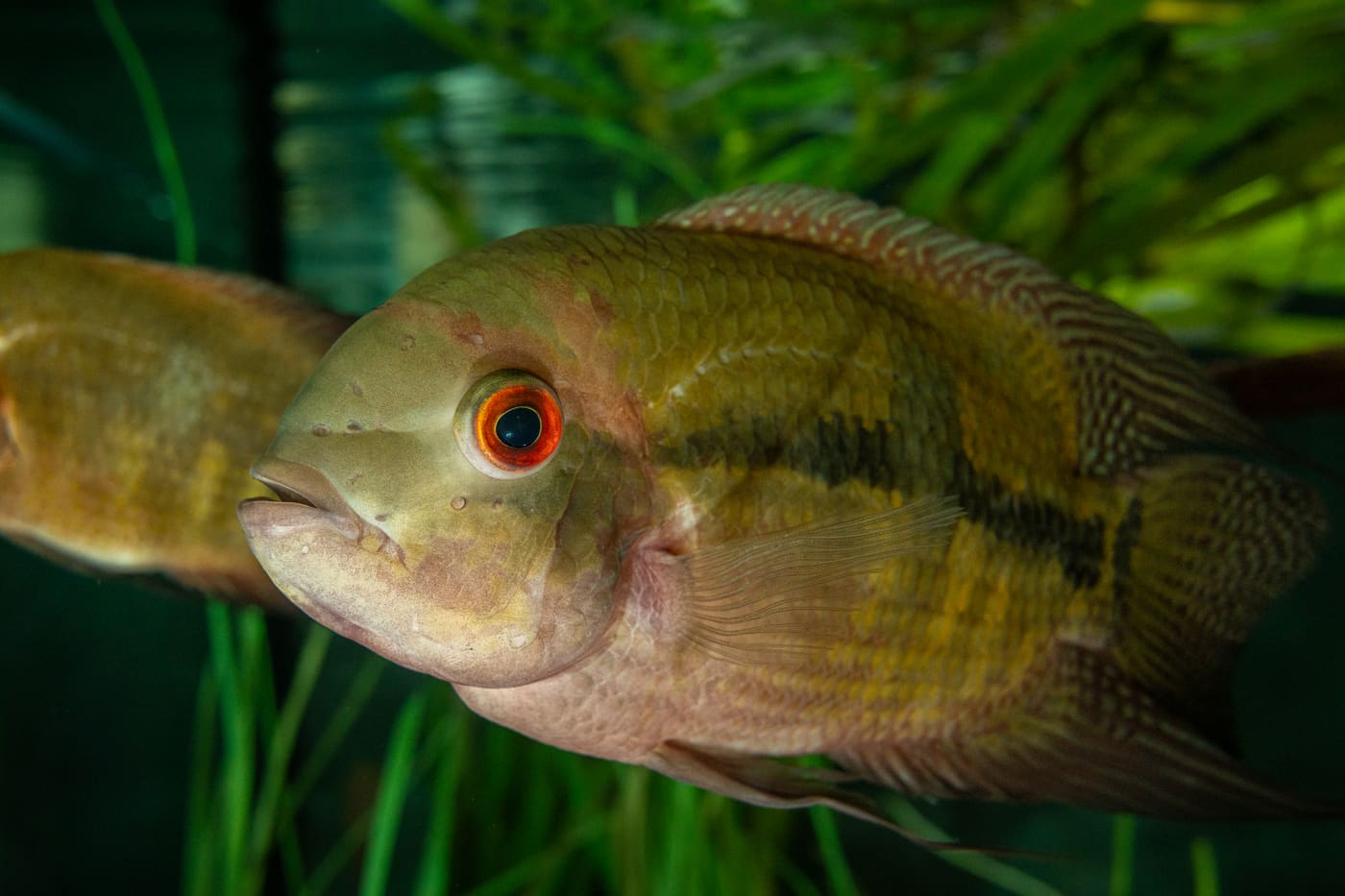
FishDifficulty: ●●●○○Data: well-established
Chocolate Cichlid — Hypselecara temporalis
📷 Mattia Nocciola · CC BY-SA 4.0 · resized · Wikimedia Commons

About

The chocolate cichlid is a large, deep-bodied South American cichlid from the slow, silt-laden waters of the Amazon and Orinoco basins, prized for its warm reddish-brown flanks and golden sheen. Unusually placid for its size, it is a gentle giant that pairs off to breed and is best kept with other calm, similarly sized tankmates.

Care

Give a single adult or a bonded pair a spacious tall tank of 300L+ with soft to neutral, warm water, a sand base and robust hardscape. Peaceful for a big cichlid but becomes territorial when spawning.

Diet

Omnivore feeding on invertebrates, algae and plant matter in the wild; offer quality pellets, frozen or live meaty foods and some greens, and avoid excess protein to prevent bloat.

Tankmate compatibility

Gets along with (28)

Possible with care (144)

African ButterflyfishAgassiz's CoryAltum AngelfishAmano ShrimpAssassin SnailBamboo ShrimpBanjo CatfishBlack Neon TetraBlack Phantom TetraBlack Ruby BarbBlack Skirt TetraBlackline RasboraBladder SnailBlood Parrot CichlidBloodfin TetraBlue AcaraBlue Dolphin CichlidBlue Velvet ShrimpBoesemani RainbowfishBolivian RamBrichard's TeleogrammaBristlenose PlecoBronze CorydorasBuenos Aires TetraBuffalohead CichlidBumblebee GobyCardinal TetraCelebes RainbowfishCelestial Pearl DanioCheckerboard CichlidCherry BarbCherry ShrimpChili RasboraChinese Algae EaterChocolate GouramiClown KillifishCochu's Blue TetraColombian Ramshorn SnailCongo Dwarf CichlidConvict CichlidCrystal Red ShrimpDiamond TetraDiscusDoctor FishDwarf Chain LoachDwarf Neon RainbowfishDwarf Orange CrayfishDwarf Pea PufferDwarf RasboraEllioti CichlidEmber TetraEmerald CoryEmperor TetraEndler's LivebearerFeatherfin SqueakerFestivum (Flag Cichlid)Figure-8 PufferFiremouth CichlidFlame TetraForktail RainbowfishFreshwater ClamGhost ShrimpGlass CatfishGlowlight DanioGlowlight TetraGold BarbGolden Dwarf CichlidGolden PencilfishGolden TetraGolden Wonder KillifishGreen DiscusGreen Neon TetraGuppyHarlequin RasboraHead-and-Tail-Light TetraHeckel DiscusJack DempseyJapanese Trapdoor SnailJewel CichlidJulii CoryKeyhole CichlidKissing GouramiLambchop RasboraLeast KillifishLemon TetraLeopard DanioLittle CorydorasMalaysian Trumpet SnailMarble HatchetfishMedaka RicefishMystery SnailNeon TetraNerite SnailOtocinclusParadise FishParaguay EartheaterPenguin TetraPeppered CorydorasPictus CatfishPlatyPort CichlidPurple Emperor TetraPygmy CorydorasRabbit SnailRainbow CichlidRainbow SharkRamshorn SnailRed DevilRed RainbowfishRed Whiptail CatfishRed-Tail SharkRedhead CichlidRosy TetraRubber Lip PlecoRummynose TetraSalt and Pepper CorySalvini CichlidScarlet BadisSerpae TetraSeverumSiamese Algae EaterSilver Tip TetraSkunk CorySparkling GouramiSpotted HoploStrawberry RasboraStriped KribensisSulawesi Cardinal ShrimpSunshine PeacockSwordtailT-Bar CichlidTexas CichlidThai Micro CrabThreadfin RainbowfishTiger BarbTurquoise RainbowfishUaru (Triangle Cichlid)Umbrella Dwarf CichlidUpside-down CatfishVampire ShrimpVenezuelan CoryWrestling HalfbeakX-ray TetraZebra Danio

Avoid (99)

Acei CichlidAdonis PlecoAuratus CichlidBala SharkBlack Moor GoldfishBlue Tiger ShrimpBorleyi (Redfin Hap)Borneo SuckerBrevis Shell DwellerBrichardi (Fairy Cichlid)Bumblebee CichlidButterfly Hillstream LoachCalvus CichlidCheckered BarbClown LoachCobalt Blue ZebraComet GoldfishCommon GoldfishCommon PlecoCompressiceps CichlidCuckoo CatfishCylindricus CichlidCyprichromisDemasoni CichlidDemon EartheaterDenison BarbDogtooth CichlidDojo (Weather) LoachDuboisi TropheusDwarf Petricola CatfishElectric Blue AhliElectric Yellow LabElongate MbunaEndlicheri BichirEven-spotted SynodontisFantail GoldfishFive-bar CichlidFrontosaGoby CichlidGolden JulieGreen Spotted PufferfishGreen TerrorHongi CichlidIridescent SharkJaguar CichlidJohanni CichlidKenyi CichlidKoiLemon CichlidLivingstoniMaingano CichlidMalawi EyebiterMalawi HawkMarlieri CichlidMasked JulieMollyMultifasciatus Shell DwellerOcellatus Shell DwellerOdessa BarbOranda GoldfishOrnate BichirOscarPanda CorydorasPeacock BassPeacock CichlidPearl DanioPike CichlidPowder Blue CichlidRanchu GoldfishRed EmpressRed TerrorRed Zebra CichlidRegan's JulieReticulated Flying FoxReticulated Hillstream LoachRostratusRosy BarbRosy Red MinnowRoyal PlecoRusty CichlidRyukin GoldfishSailfin MollySailfin PlecoSand-sifting XenotilapiaSaulosi CichlidScissortail RasboraShubunkin GoldfishSilver ArowanaSilver MoonySimilis Shell DwellerStar SapphireTaiwan Reef CichlidTelescope GoldfishThreadfin PetrochromisTropheusVenustus (Giraffe Cichlid)White Cloud Mountain MinnowWolf CichlidZebra Mbuna

Computed by the AquaSage engine for a spacious reference tank — always check the full verdict for your exact setup in the calculator.

Telling males from females

What works for this species, most reliable first.

  • Extended finsStrong · from about 8 months, and later in a suppressed male

    On many cichlids and killifish the male's dorsal and anal fins draw out into trailing points as he matures, while the female's stay rounded.

  • VentingA hint only · only on a mature fish, easiest when she is in breeding condition

    The method breeders use when the answer has to be right. Hold the fish upside down in a wet hand or soft net and look at the two openings ahead of the anal fin. The forward one is the anus; the one behind it is what you are reading.

  • Adult sizeA hint only · only across animals of the same age

    In many cichlids, catfish and loaches one sex simply grows larger — usually the male, though there are well-known reversals.

All the methods, with diagrams

Also in these lists

Frequently asked questions

What tank size does a Chocolate Cichlid need?
A Chocolate Cichlid needs an aquarium of at least 300 litres (79.3 US gallons) with a footprint at least 120 cm (47.2 in) long — for this species, swimming length matters as much as raw volume.
What water parameters does a Chocolate Cichlid need?
Chocolate Cichlid does best at 25–30 °C (77–86 °F), pH 5–7.5 and a general hardness of 1–15 °dGH.
Is the Chocolate Cichlid suitable for beginners?
Chocolate Cichlid sits in the middle of the difficulty scale — manageable for a careful beginner who has done the reading, but it has specific needs worth researching first.

Sources

Water & tank

Temperature25–30°C
Optimal temp.26–28°C
pH5–7.5
Hardness (GH)1–15°d
Carbonate (KH)0–10°d
Adult size30 cm
Min. volume≥ 300 L
Min. tank length≥ 120 cm
Swimming zoneMid
TemperamentPeaceful
Water typeFreshwater
FlowLow
Lifespan~10 yrs
Try in the calculator