AquaSage
Species library

Blue Tiger Shrimp

Caridina cantonensis

Atyidae
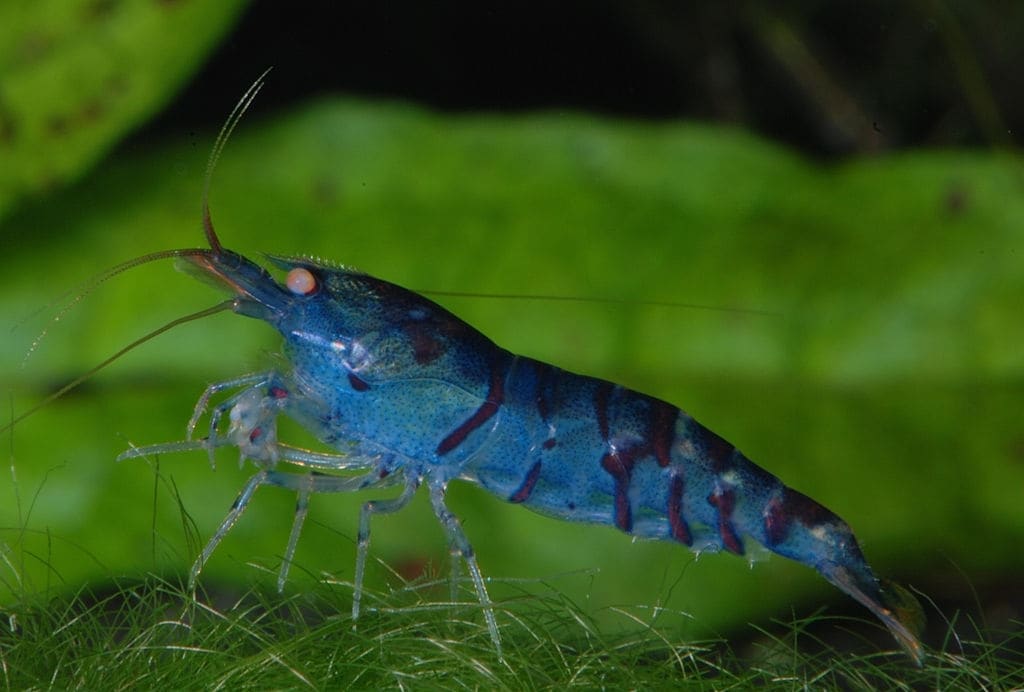
InvertsDifficulty: ●●●○○Data: verified
Blue Tiger Shrimp — Caridina cantonensis
📷 DirkBlankenhaus · CC BY-SA 3.0 · resized · Wikimedia Commons

About

The blue tiger shrimp, usually sold as the orange-eye blue tiger (OEBT), is a selectively bred colour form of the Caridina bee-and-tiger shrimp complex, prized for its glowing sky-to-royal-blue body crossed by dark tiger stripes and vivid orange eyes. It does not occur in the wild and does not breed fully true, so a single brood will throw both deep-blue and paler siblings. Peaceful and endlessly busy, it grazes biofilm and algae across a mature, stable nano aquarium, but it is fussier than a cherry shrimp and rewards clean, soft, low-nutrient water.

Care

Keep a colony of 10+ in a mature, fully cycled nano tank on soft, stable, low-nitrate water (ideally RO remineralised for shrimp) with gentle sponge-filter flow, plenty of moss and biofilm, and steady GH for clean molts. Do not house with other bee or tiger shrimp, as they interbreed. Highly copper-sensitive.

Diet

Omnivorous biofilm and algae grazer that also works over detritus and leaf litter. Offer a light dusting of prepared shrimp food, blanched vegetables and occasional biofilm boosters a few times weekly, and never overfeed, since excess food quickly spoils the clean water it needs.

Tankmate compatibility

Gets along with (31)

Possible with care (137)

African Butterfly CichlidAgassiz's CoryAgassiz's Dwarf CichlidAmano ShrimpAssassin SnailBamboo ShrimpBanjo CatfishBlack Moor GoldfishBlack Neon TetraBlack Phantom TetraBladder SnailBleeding Heart TetraBlood Parrot CichlidBlue AcaraBlue Velvet ShrimpBoesemani RainbowfishBolivian RamBorleyi (Redfin Hap)Brichard's TeleogrammaBristlenose PlecoBronze CorydorasBuenos Aires TetraBuffalohead CichlidBumblebee GobyButterfly Hillstream LoachCardinal TetraCelebes RainbowfishCheckerboard CichlidCherry BarbCherry ShrimpChili RasboraChinese Algae EaterChocolate GouramiClown PlecoCockatoo Dwarf CichlidColombian Ramshorn SnailComet GoldfishCommon GoldfishCongo TetraConvict CichlidCrystal Red ShrimpDenison BarbDiamond TetraDojo (Weather) LoachDwarf Chain LoachDwarf Flag CichlidDwarf GouramiDwarf Neon RainbowfishDwarf Orange CrayfishDwarf RasboraElephantnose FishEllioti CichlidEmber TetraEmerald CoryEmperor TetraFantail GoldfishFestivum (Flag Cichlid)Firemouth CichlidForktail RainbowfishFreshwater ClamGhost ShrimpGlowlight TetraGolden PencilfishGolden TetraGreen Neon TetraGuppyHarlequin RasboraHead-and-Tail-Light TetraHoney GouramiJapanese Trapdoor SnailKeyhole CichlidKissing GouramiKribensisKuhli LoachLambchop RasboraLeast KillifishLemon TetraMacmasteri Dwarf CichlidMalaysian Trumpet SnailMarble HatchetfishMedaka RicefishMoonlight GouramiMystery SnailNeon TetraNerite SnailOdessa BarbOranda GoldfishParadise FishParaguay EartheaterPeaceful BettaPearl GouramiPenguin TetraPolka Dot LoachPort CichlidPurple Emperor TetraRabbit SnailRainbow CichlidRainbow SharkRamshorn SnailRanchu GoldfishRed RainbowfishRed Whiptail CatfishRed-Tail SharkRedhead CichlidRosy Red MinnowRosy TetraRubber Lip PlecoRummynose TetraRyukin GoldfishScissortail RasboraSerpae TetraSeverumShubunkin GoldfishSiamese Algae EaterSilver Tip TetraSimilis Shell DwellerSkunk CorySparkling GouramiSterbai CorydorasStrawberry RasboraStriped KribensisSveni EartheaterT-Bar CichlidTelescope GoldfishThai Micro CrabThick-lipped GouramiThreadfin AcaraThreadfin RainbowfishThree-spot GouramiTiger BarbTurquoise RainbowfishUpside-down CatfishVampire ShrimpVenezuelan CoryWrestling HalfbeakX-ray TetraYoyo Loach

Avoid (103)

Acei CichlidAdonis PlecoAfrican ButterflyfishAltum AngelfishAngelfishAuratus CichlidBala SharkBetta (Siamese Fighting Fish)Blue Dolphin CichlidBrevis Shell DwellerBrichardi (Fairy Cichlid)Bumblebee CichlidCalvus CichlidChocolate CichlidClown LoachCobalt Blue ZebraCommon PlecoCompressiceps CichlidCuckoo CatfishCylindricus CichlidCyprichromisDemasoni CichlidDemon EartheaterDiscusDogtooth CichlidDuboisi TropheusDwarf Pea PufferDwarf Petricola CatfishElectric Blue AhliElectric Yellow LabElongate MbunaEndler's LivebearerEndlicheri BichirEven-spotted SynodontisFeatherfin SqueakerFigure-8 PufferFive-bar CichlidFrontosaGerman Blue RamGoby CichlidGolden JulieGolden Wonder KillifishGreen DiscusGreen Spotted PufferfishGreen TerrorHeckel DiscusHongi CichlidIridescent SharkJack DempseyJaguar CichlidJewel CichlidJohanni CichlidKenyi CichlidKoiLemon CichlidLivingstoniMaingano CichlidMalawi EyebiterMalawi HawkMarlieri CichlidMasked JulieMollyMultifasciatus Shell DwellerOcellatus Shell DwellerOrnate BichirOscarPeacock BassPeacock CichlidPictus CatfishPike CichlidPlatyPowder Blue CichlidRed DevilRed EmpressRed TerrorRed Zebra CichlidRegan's JulieReticulated Flying FoxRostratusRoyal PlecoRusty CichlidSailfin MollySailfin PlecoSalvini CichlidSand-sifting XenotilapiaSaulosi CichlidSilver ArowanaSilver MoonySpotted HoploStar SapphireStriped Raphael CatfishSulawesi Cardinal ShrimpSunshine PeacockSwordtailTaiwan Reef CichlidTexas CichlidThreadfin PetrochromisTropheusUaru (Triangle Cichlid)Venustus (Giraffe Cichlid)Wolf CichlidZebra MbunaZebra Pleco

Computed by the AquaSage engine for a spacious reference tank — always check the full verdict for your exact setup in the calculator.

Telling males from females

What works for this species, most reliable first.

  • Saddle and berryStrong · at 12–18 mm body length — under 10 mm nothing shows

    The ovaries show through the shell behind the head as a pale yellow or green patch shaped like a saddle. Those are unfertilised eggs, and their appearance is what tells you she is mature. Once she is carrying, they move under the tail and are fanned by her swimmerets.

All the methods, with diagrams

Also in these lists

Frequently asked questions

What tank size does a Blue Tiger Shrimp need?
A Blue Tiger Shrimp needs an aquarium of at least 38 litres (10 US gallons) with a footprint at least 45 cm (17.7 in) long — for this species, swimming length matters as much as raw volume.
What water parameters does a Blue Tiger Shrimp need?
Blue Tiger Shrimp does best at 18–25 °C (64.4–77 °F), pH 5.8–7.8 and a general hardness of 4–10 °dGH.
What group size does a Blue Tiger Shrimp need?
Blue Tiger Shrimp is a social species — keep a group of at least 10 so natural behaviour emerges and stress stays low.
Is the Blue Tiger Shrimp suitable for beginners?
Blue Tiger Shrimp sits in the middle of the difficulty scale — manageable for a careful beginner who has done the reading, but it has specific needs worth researching first.

Sources

Water & tank

Temperature18–25°C
Optimal temp.20–24°C
pH5.8–7.8
Hardness (GH)4–10°d
Carbonate (KH)0–6°d
Adult size3 cm
Min. volume≥ 38 L
Min. tank length≥ 45 cm
Group size≥ 10
Swimming zoneBottom
TemperamentPeaceful
Water typeFreshwater
FlowLow
Lifespan~1.5 yrs
Try in the calculator