AquaSage
Species library

Blue Velvet Shrimp

Neocaridina davidi

Atyidae
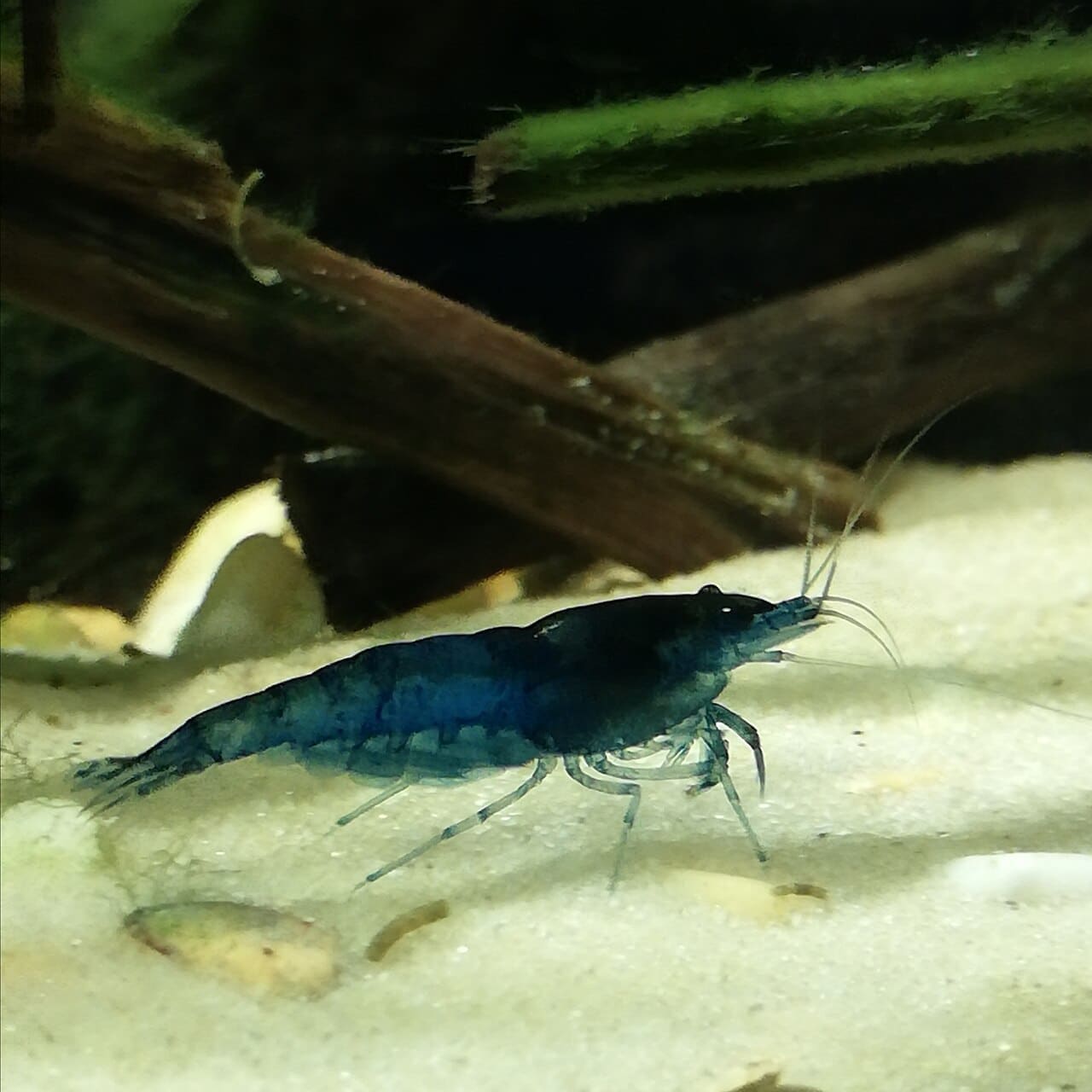
InvertsDifficulty: ●●○○○Data: well-established
Blue Velvet Shrimp — Neocaridina davidi
📷 Roth 1312 · CC-BY-4.0 · resized · Wikimedia Commons

About

The blue velvet shrimp is a solid-blue selectively bred strain of Neocaridina davidi, the very same species as the red cherry shrimp. It is among the hardiest and most beginner-friendly dwarf shrimp in the hobby: a peaceful, always-busy biofilm grazer that tolerates a wide range of water chemistry and breeds freely in a stable, mature planted tank. Its deep blue body shows best against dark substrate and green moss. Because it is genetically identical to other Neocaridina colours, it must not be housed with different colour strains.

Care

Keep a colony in a mature, stable planted nano tank with gentle flow, moss and biofilm, and steady GH for clean molting. Very sensitive to copper and to ammonia or nitrite spikes; acclimate slowly. Do not mix with other Neocaridina colour strains or offspring revert to wild brown.

Diet

Omnivorous grazer that lives off biofilm, soft algae, detritus and leaf litter. Offer blanched vegetables and a small pinch of prepared shrimp food a few times weekly, never more than the colony clears quickly.

Tankmate compatibility

Gets along with (59)

Possible with care (132)

Acei CichlidAfrican Butterfly CichlidAgassiz's Dwarf CichlidAssassin SnailAuratus CichlidBlack Neon TetraBlack Phantom TetraBlack Ruby BarbBlack Skirt TetraBlackline RasboraBleeding Heart TetraBlood Parrot CichlidBlue AcaraBlue Dolphin CichlidBlue Tiger ShrimpBoesemani RainbowfishBorleyi (Redfin Hap)Brichard's TeleogrammaBrichardi (Fairy Cichlid)Buenos Aires TetraBuffalohead CichlidBumblebee CichlidBumblebee GobyCelebes RainbowfishCheckerboard CichlidCheckered BarbCherry BarbChili RasboraChocolate CichlidClown KillifishCobalt Blue ZebraCochu's Blue TetraCockatoo Dwarf CichlidColombian Ramshorn SnailCongo Dwarf CichlidCongo TetraConvict CichlidCrystal Red ShrimpDemasoni CichlidDiamond TetraDiscusDojo (Weather) LoachDwarf Chain LoachDwarf Flag CichlidDwarf GouramiDwarf RasboraElephantnose FishEllioti CichlidElongate MbunaEmber TetraEmperor TetraEndler's LivebearerFestivum (Flag Cichlid)Firemouth CichlidFive-bar CichlidFlame TetraGerman Blue RamGlowlight TetraGolden Dwarf CichlidGolden PencilfishGolden TetraGreen DiscusGreen Neon TetraHarlequin RasboraHead-and-Tail-Light TetraHeckel DiscusHongi CichlidJohanni CichlidKenyi CichlidKeyhole CichlidKissing GouramiKuhli LoachLambchop RasboraLemon TetraLittle CorydorasMacmasteri Dwarf CichlidMaingano CichlidMarble HatchetfishMarlieri CichlidMedaka RicefishMoonlight GouramiMultifasciatus Shell DwellerNeon TetraNerite SnailPanda CorydorasParadise FishParaguay EartheaterPeaceful BettaPeacock CichlidPearl GouramiPlatyPolka Dot LoachPort CichlidPowder Blue CichlidPurple Emperor TetraPygmy CorydorasRabbit SnailRainbow CichlidRed EmpressRed RainbowfishRed Zebra CichlidRedhead CichlidRosy TetraRummynose TetraRusty CichlidSaulosi CichlidSerpae TetraSeverumSimilis Shell DwellerSkunk CorySparkling GouramiStar SapphireSterbai CorydorasStrawberry RasboraStriped KribensisSulawesi Cardinal ShrimpSunshine PeacockSveni EartheaterSwordtailT-Bar CichlidTaiwan Reef CichlidThick-lipped GouramiThreadfin AcaraThreadfin RainbowfishThree-spot GouramiTurquoise RainbowfishUaru (Triangle Cichlid)Umbrella Dwarf CichlidWhite Cloud Mountain MinnowWrestling HalfbeakYoyo LoachZebra Pleco

Avoid (80)

Computed by the AquaSage engine for a spacious reference tank — always check the full verdict for your exact setup in the calculator.

Telling males from females

What works for this species, most reliable first.

  • Saddle and berryStrong · at 12–18 mm body length — under 10 mm nothing shows

    The ovaries show through the shell behind the head as a pale yellow or green patch shaped like a saddle. Those are unfertilised eggs, and their appearance is what tells you she is mature. Once she is carrying, they move under the tail and are fanned by her swimmerets.

All the methods, with diagrams

Also in these lists

Frequently asked questions

What tank size does a Blue Velvet Shrimp need?
A Blue Velvet Shrimp needs an aquarium of at least 19 litres (5 US gallons) with a footprint at least 30 cm (11.8 in) long — for this species, swimming length matters as much as raw volume.
What water parameters does a Blue Velvet Shrimp need?
Blue Velvet Shrimp does best at 18–28 °C (64.4–82.4 °F), pH 6.5–8 and a general hardness of 4–14 °dGH.
What group size does a Blue Velvet Shrimp need?
Blue Velvet Shrimp is a social species — keep a group of at least 10 so natural behaviour emerges and stress stays low.
Is the Blue Velvet Shrimp suitable for beginners?
Yes — Blue Velvet Shrimp is one of the easier species to keep and forgives typical first-tank mistakes, as long as the aquarium is cycled and maintained.

Sources

Water & tank

Temperature18–28°C
Optimal temp.20–26°C
pH6.5–8
Hardness (GH)4–14°d
Carbonate (KH)1–8°d
Adult size3.5 cm
Min. volume≥ 19 L
Min. tank length≥ 30 cm
Group size≥ 10
Swimming zoneBottom
TemperamentPeaceful
Water typeFreshwater
FlowLow
Lifespan~1.5 yrs
Try in the calculator