Cockatoo Dwarf Cichlid
Apistogramma cacatuoides
Cichlidae
About
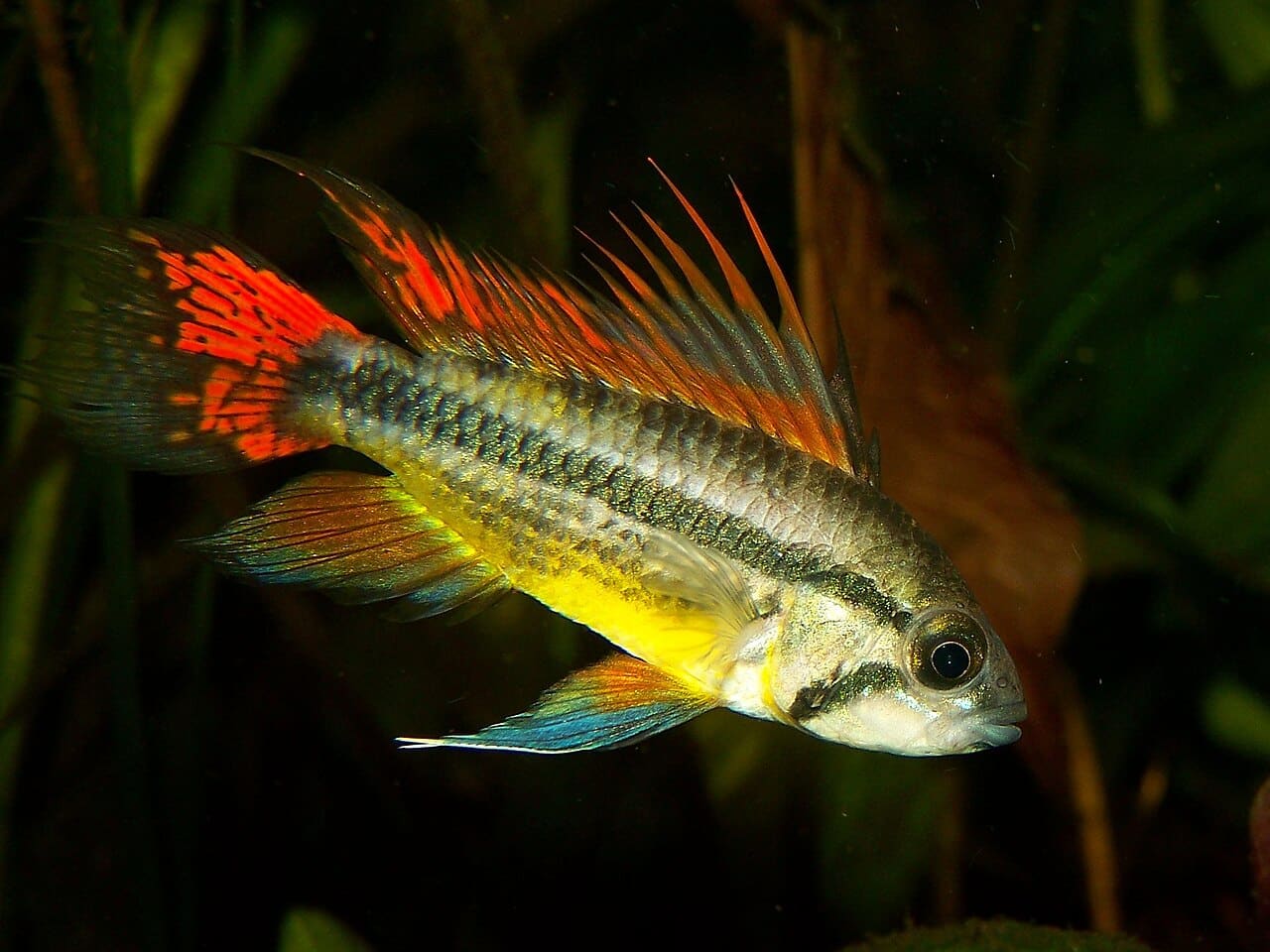
Apistogramma cacatuoides, the cockatoo dwarf cichlid, is the most widely kept and forgiving of the Apistogramma genus. Males are spectacular, with a spiky raised dorsal fin evoking a cockatoo's crest and fins splashed in orange, red and black. Native to Peruvian Amazon backwaters, it is a cave-spawning harem breeder in which one male courts several females. Captive strains tolerate a broad range of water chemistry.
Care
Keep one male with two or three females over soft sand, with caves for each female to claim. Provide gentle flow and warm, soft-to-neutral water; hardier than most apistos but still needs clean, stable conditions.
Diet
Micro-predator; feed frozen and live bloodworms, brine shrimp and daphnia, supplemented with quality pellets for best colour.
Tankmate compatibility
Gets along with (58)
Possible with care (119)
Avoid (94)
Computed by the AquaSage engine for a spacious reference tank — always check the full verdict for your exact setup in the calculator.
Telling males from females
What works for this species, most reliable first.
- Extended finsStrong · from about 8 months, and later in a suppressed male
On many cichlids and killifish the male's dorsal and anal fins draw out into trailing points as he matures, while the female's stay rounded.
- VentingA hint only · only on a mature fish, easiest when she is in breeding condition
The method breeders use when the answer has to be right. Hold the fish upside down in a wet hand or soft net and look at the two openings ahead of the anal fin. The forward one is the anus; the one behind it is what you are reading.
- Adult sizeA hint only · only across animals of the same age
In many cichlids, catfish and loaches one sex simply grows larger — usually the male, though there are well-known reversals.
Also in these lists
Frequently asked questions
- What tank size does a Cockatoo Dwarf Cichlid need?
- A Cockatoo Dwarf Cichlid needs an aquarium of at least 90 litres (23.8 US gallons) with a footprint at least 75 cm (29.5 in) long — for this species, swimming length matters as much as raw volume.
- What water parameters does a Cockatoo Dwarf Cichlid need?
- Cockatoo Dwarf Cichlid does best at 24–29 °C (75.2–84.2 °F), pH 5.5–7.5 and a general hardness of 1–12 °dGH.
- Is the Cockatoo Dwarf Cichlid suitable for beginners?
- Cockatoo Dwarf Cichlid sits in the middle of the difficulty scale — manageable for a careful beginner who has done the reading, but it has specific needs worth researching first.