AquaSage
Species library

Malawi Eyebiter

Dimidiochromis compressiceps

Cichlidae
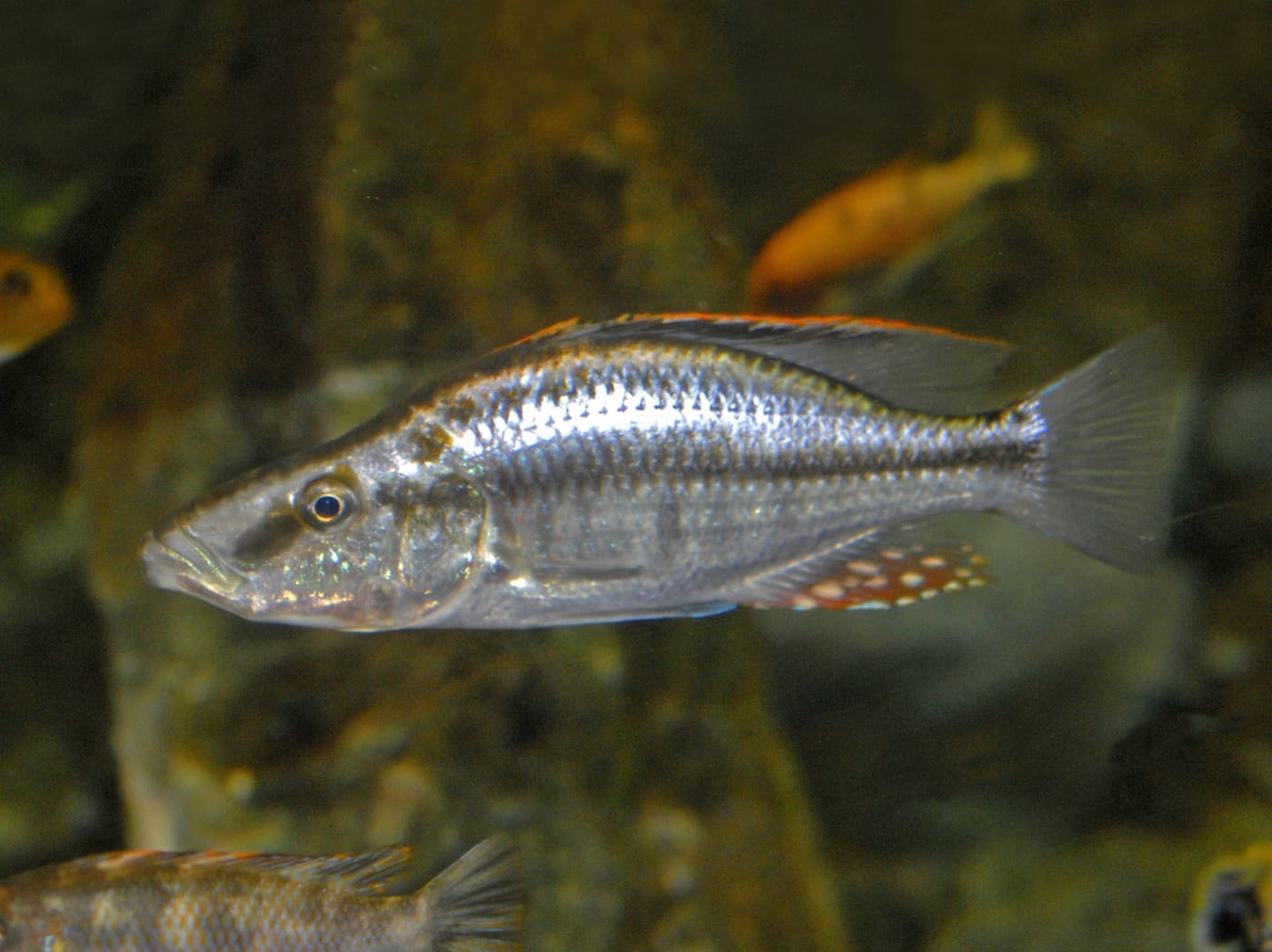
FishDifficulty: ●●●○○Data: well-established
Malawi Eyebiter — Dimidiochromis compressiceps
📷 Hectonichus · CC BY-SA 3.0 · resized · Wikimedia Commons

About

The Malawi eyebiter is a large, silvery, strongly laterally compressed haplochromine cichlid endemic to Lake Malawi, Lake Malombe and the upper Shire River. A stealthy ambush predator, it hangs among tall Vallisneria beds and darts out to seize juvenile utaka and other small shoaling fish. Its slim blade-like profile and big oblique mouth make it an unmistakable and impressive centrepiece for spacious hard-water aquariums.

Care

House in a large 350 L+ tank at least 150 cm long with hard, alkaline water, a sand base, rockwork and tall plants for cover. Keep as a harem of one male to several females and only with robust tankmates too big to be swallowed. Cover the tank securely.

Diet

An obligate fish-eater in nature; feed varied frozen and fresh meaty foods and carnivore pellets, and never keep with fish small enough to become prey.

Tankmate compatibility

Gets along with (1)

Possible with care (59)

Avoid (211)

Adonis PlecoAfrican Butterfly CichlidAfrican ButterflyfishAgassiz's CoryAgassiz's Dwarf CichlidAltum AngelfishAmano ShrimpAngelfishAssassin SnailAuratus CichlidBala SharkBamboo ShrimpBanjo CatfishBetta (Siamese Fighting Fish)Black Moor GoldfishBlack Neon TetraBlack Phantom TetraBlack Ruby BarbBlack Skirt TetraBlackline RasboraBladder SnailBleeding Heart TetraBloodfin TetraBlue Tiger ShrimpBlue Velvet ShrimpBoesemani RainbowfishBolivian RamBorneo SuckerBrevis Shell DwellerBrichard's TeleogrammaBrichardi (Fairy Cichlid)Bronze CorydorasBuenos Aires TetraBuffalohead CichlidBumblebee GobyButterfly Hillstream LoachCardinal TetraCelebes RainbowfishCelestial Pearl DanioCheckerboard CichlidCheckered BarbCherry BarbCherry ShrimpChili RasboraChocolate CichlidChocolate GouramiClown KillifishClown LoachClown PlecoCochu's Blue TetraCockatoo Dwarf CichlidColombian Ramshorn SnailComet GoldfishCommon GoldfishCommon PlecoCongo Dwarf CichlidCongo TetraCrystal Red ShrimpCylindricus CichlidCyprichromisDemasoni CichlidDemon EartheaterDiamond TetraDiscusDogtooth CichlidDuboisi TropheusDwarf Chain LoachDwarf Flag CichlidDwarf GouramiDwarf Neon RainbowfishDwarf Orange CrayfishDwarf Pea PufferDwarf Petricola CatfishDwarf RasboraElectric Yellow LabElephantnose FishEmber TetraEmerald CoryEmperor TetraEndler's LivebearerEndlicheri BichirFantail GoldfishFeatherfin SqueakerFigure-8 PufferFlame TetraForktail RainbowfishFreshwater ClamFrontosaGerman Blue RamGhost ShrimpGlass CatfishGlowlight DanioGlowlight TetraGoby CichlidGold BarbGolden Dwarf CichlidGolden JulieGolden PencilfishGolden TetraGolden Wonder KillifishGreen DiscusGreen Neon TetraGreen Spotted PufferfishGuppyHarlequin RasboraHead-and-Tail-Light TetraHeckel DiscusHoney GouramiHongi CichlidIridescent SharkJaguar CichlidJapanese Trapdoor SnailJohanni CichlidJulii CoryKeyhole CichlidKoiKribensisKuhli LoachLambchop RasboraLeast KillifishLemon CichlidLemon TetraLeopard DanioLittle CorydorasMacmasteri Dwarf CichlidMaingano CichlidMalawi HawkMalaysian Trumpet SnailMarble HatchetfishMasked JulieMedaka RicefishMollyMoonlight GouramiMultifasciatus Shell DwellerMystery SnailNeon TetraNerite SnailOcellatus Shell DwellerOdessa BarbOranda GoldfishOrnate BichirOscarOtocinclusPanda CorydorasParadise FishPeaceful BettaPeacock BassPearl DanioPearl GouramiPenguin TetraPeppered CorydorasPike CichlidPlatyPolka Dot LoachPowder Blue CichlidPurple Emperor TetraPygmy CorydorasRabbit SnailRainbow CichlidRamshorn SnailRanchu GoldfishRed TerrorRed Whiptail CatfishReticulated Flying FoxReticulated Hillstream LoachRostratusRosy Red MinnowRosy TetraRoyal PlecoRubber Lip PlecoRummynose TetraRusty CichlidRyukin GoldfishSailfin MollySailfin PlecoSalt and Pepper CorySand-sifting XenotilapiaSaulosi CichlidScarlet BadisSerpae TetraSeverumShubunkin GoldfishSilver ArowanaSilver MoonySilver Tip TetraSimilis Shell DwellerSkunk CorySparkling GouramiSterbai CorydorasStrawberry RasboraStriped KribensisStriped Raphael CatfishSulawesi Cardinal ShrimpSveni EartheaterT-Bar CichlidTelescope GoldfishThai Micro CrabThick-lipped GouramiThreadfin RainbowfishTiger BarbTurquoise RainbowfishUaru (Triangle Cichlid)Umbrella Dwarf CichlidUpside-down CatfishVenezuelan CoryWhite Cloud Mountain MinnowWolf CichlidWrestling HalfbeakX-ray TetraZebra DanioZebra Pleco

Computed by the AquaSage engine for a spacious reference tank — always check the full verdict for your exact setup in the calculator.

Telling males from females

What works for this species, most reliable first.

  • Extended finsStrong · from about 8 months, and later in a suppressed male

    On many cichlids and killifish the male's dorsal and anal fins draw out into trailing points as he matures, while the female's stay rounded.

  • VentingA hint only · only on a mature fish, easiest when she is in breeding condition

    The method breeders use when the answer has to be right. Hold the fish upside down in a wet hand or soft net and look at the two openings ahead of the anal fin. The forward one is the anus; the one behind it is what you are reading.

  • Adult sizeA hint only · only across animals of the same age

    In many cichlids, catfish and loaches one sex simply grows larger — usually the male, though there are well-known reversals.

All the methods, with diagrams

Also in these lists

Frequently asked questions

What tank size does a Malawi Eyebiter need?
A Malawi Eyebiter needs an aquarium of at least 350 litres (92.5 US gallons) with a footprint at least 150 cm (59.1 in) long — for this species, swimming length matters as much as raw volume.
What water parameters does a Malawi Eyebiter need?
Malawi Eyebiter does best at 23–28 °C (73.4–82.4 °F), pH 7.5–8.8 and a general hardness of 10–25 °dGH.
What group size does a Malawi Eyebiter need?
Malawi Eyebiter is a social species — keep a group of at least 4 so natural behaviour emerges and stress stays low.
Is the Malawi Eyebiter suitable for beginners?
Malawi Eyebiter sits in the middle of the difficulty scale — manageable for a careful beginner who has done the reading, but it has specific needs worth researching first.

Sources

Water & tank

Temperature23–28°C
Optimal temp.25–27°C
pH7.5–8.8
Hardness (GH)10–25°d
Carbonate (KH)6–18°d
Adult size25 cm
Min. volume≥ 350 L
Min. tank length≥ 150 cm
Group size≥ 4
Swimming zoneMid
TemperamentSemi-aggressive
Water typeFreshwater
FlowModerate
Lifespan~10 yrs
Try in the calculator