AquaSage
Species library

Bolivian Ram

Mikrogeophagus altispinosus

Cichlidae
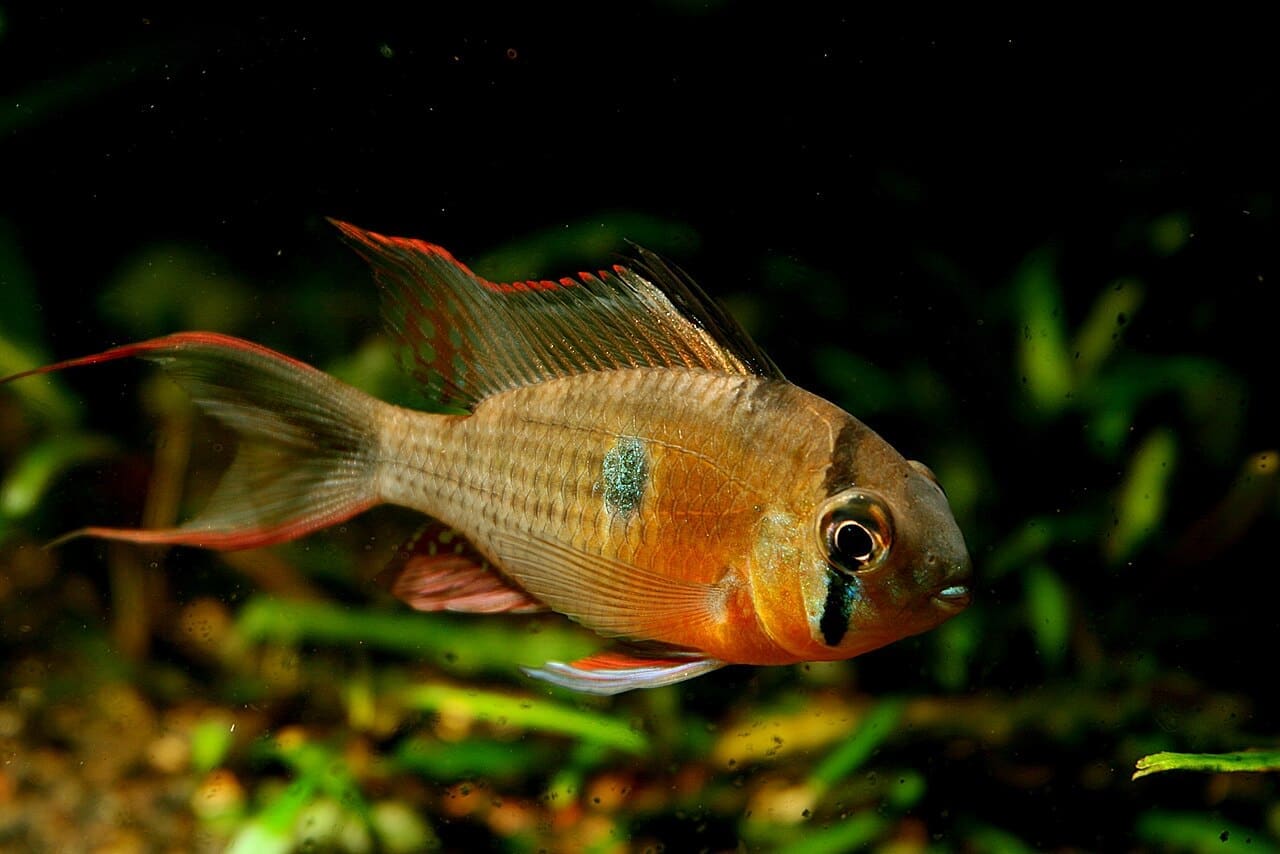
FishDifficulty: ●●●○○Data: well-established
Bolivian Ram — Mikrogeophagus altispinosus
📷 Elma from Reykjavík · CC BY 2.0 · resized · Wikimedia Commons

About

The Bolivian ram is a hardy, personable dwarf cichlid with a silvery-tan body, a black eye stripe, and warm yellow and red fin edging that intensifies with mood. Native to the Amazon basin of Bolivia and Brazil, it tolerates a wider, cooler range of conditions than the German blue ram, making it an excellent first cichlid. It forms pairs, sifts sand for food, and shows charming, inquisitive behaviour.

Care

Keep as a pair in a soft-sand tank of 90 L or more with cooler, stable water. Far hardier than the German blue ram; mildly territorial when breeding but peaceful in community settings.

Diet

Omnivore that sifts sand; feed sinking pellets and frozen foods. Accepts a broad diet and is much less delicate than its German cousin.

Tankmate compatibility

Gets along with (86)

Possible with care (127)

Acei CichlidAfrican ButterflyfishAgassiz's Dwarf CichlidAngelfishAssassin SnailAuratus CichlidBetta (Siamese Fighting Fish)Bladder SnailBlue AcaraBlue Dolphin CichlidBlue Tiger ShrimpBorleyi (Redfin Hap)Borneo SuckerBrevis Shell DwellerBuenos Aires TetraBuffalohead CichlidBumblebee CichlidBumblebee GobyButterfly Hillstream LoachCardinal TetraCelebes RainbowfishCelestial Pearl DanioCheckerboard CichlidCheckered BarbChili RasboraChocolate CichlidChocolate GouramiClown KillifishCobalt Blue ZebraColombian Ramshorn SnailCongo Dwarf CichlidConvict CichlidCrystal Red ShrimpCylindricus CichlidDemasoni CichlidDenison BarbDoctor FishDogtooth CichlidDojo (Weather) LoachDwarf Orange CrayfishDwarf Petricola CatfishDwarf RasboraElectric Blue AhliElectric Yellow LabEllioti CichlidElongate MbunaEmber TetraEndler's LivebearerEven-spotted SynodontisFestivum (Flag Cichlid)Figure-8 PufferFiremouth CichlidFive-bar CichlidForktail RainbowfishGerman Blue RamGlowlight DanioGold BarbGolden JulieGreen Neon TetraGuppyHongi CichlidJack DempseyJapanese Trapdoor SnailJewel CichlidJohanni CichlidKenyi CichlidKissing GouramiKuhli LoachLambchop RasboraLeast KillifishLemon CichlidLeopard DanioMacmasteri Dwarf CichlidMaingano CichlidMalaysian Trumpet SnailMarble HatchetfishMarlieri CichlidMedaka RicefishMoonlight GouramiMultifasciatus Shell DwellerMystery SnailNeon TetraNerite SnailOcellatus Shell DwellerOdessa BarbPanda CorydorasParadise FishParaguay EartheaterPeacock CichlidPearl DanioPeppered CorydorasPlatyPort CichlidPowder Blue CichlidRabbit SnailRainbow CichlidRamshorn SnailRed EmpressRed RainbowfishRed Zebra CichlidRedhead CichlidRegan's JulieReticulated Hillstream LoachRosy BarbRubber Lip PlecoRummynose TetraRusty CichlidSalvini CichlidSaulosi CichlidSeverumSimilis Shell DwellerSpotted HoploStar SapphireStrawberry RasboraSulawesi Cardinal ShrimpSunshine PeacockSveni EartheaterSwordtailTaiwan Reef CichlidThreadfin AcaraTurquoise RainbowfishUaru (Triangle Cichlid)White Cloud Mountain MinnowWrestling HalfbeakZebra DanioZebra MbunaZebra Pleco

Avoid (58)

Computed by the AquaSage engine for a spacious reference tank — always check the full verdict for your exact setup in the calculator.

Telling males from females

What works for this species, most reliable first.

  • Extended finsStrong · from about 8 months, and later in a suppressed male

    On many cichlids and killifish the male's dorsal and anal fins draw out into trailing points as he matures, while the female's stay rounded.

  • VentingA hint only · only on a mature fish, easiest when she is in breeding condition

    The method breeders use when the answer has to be right. Hold the fish upside down in a wet hand or soft net and look at the two openings ahead of the anal fin. The forward one is the anus; the one behind it is what you are reading.

  • Adult sizeA hint only · only across animals of the same age

    In many cichlids, catfish and loaches one sex simply grows larger — usually the male, though there are well-known reversals.

All the methods, with diagrams

Also in these lists

Frequently asked questions

What tank size does a Bolivian Ram need?
A Bolivian Ram needs an aquarium of at least 110 litres (29.1 US gallons) with a footprint at least 75 cm (29.5 in) long — for this species, swimming length matters as much as raw volume.
What water parameters does a Bolivian Ram need?
Bolivian Ram does best at 22–27 °C (71.6–80.6 °F), pH 6–7.8 and a general hardness of 3–15 °dGH.
Is the Bolivian Ram suitable for beginners?
Bolivian Ram sits in the middle of the difficulty scale — manageable for a careful beginner who has done the reading, but it has specific needs worth researching first.

Sources

Water & tank

Temperature22–27°C
Optimal temp.24–26°C
pH6–7.8
Hardness (GH)3–15°d
Carbonate (KH)1–10°d
Adult size8 cm
Min. volume≥ 110 L
Min. tank length≥ 75 cm
Swimming zoneBottom
TemperamentPeaceful
Water typeFreshwater
FlowLow
Lifespan~4 yrs
Try in the calculator