AquaSage
Species library

Butterfly Hillstream Loach

Beaufortia leveretti

Gastromyzontidae
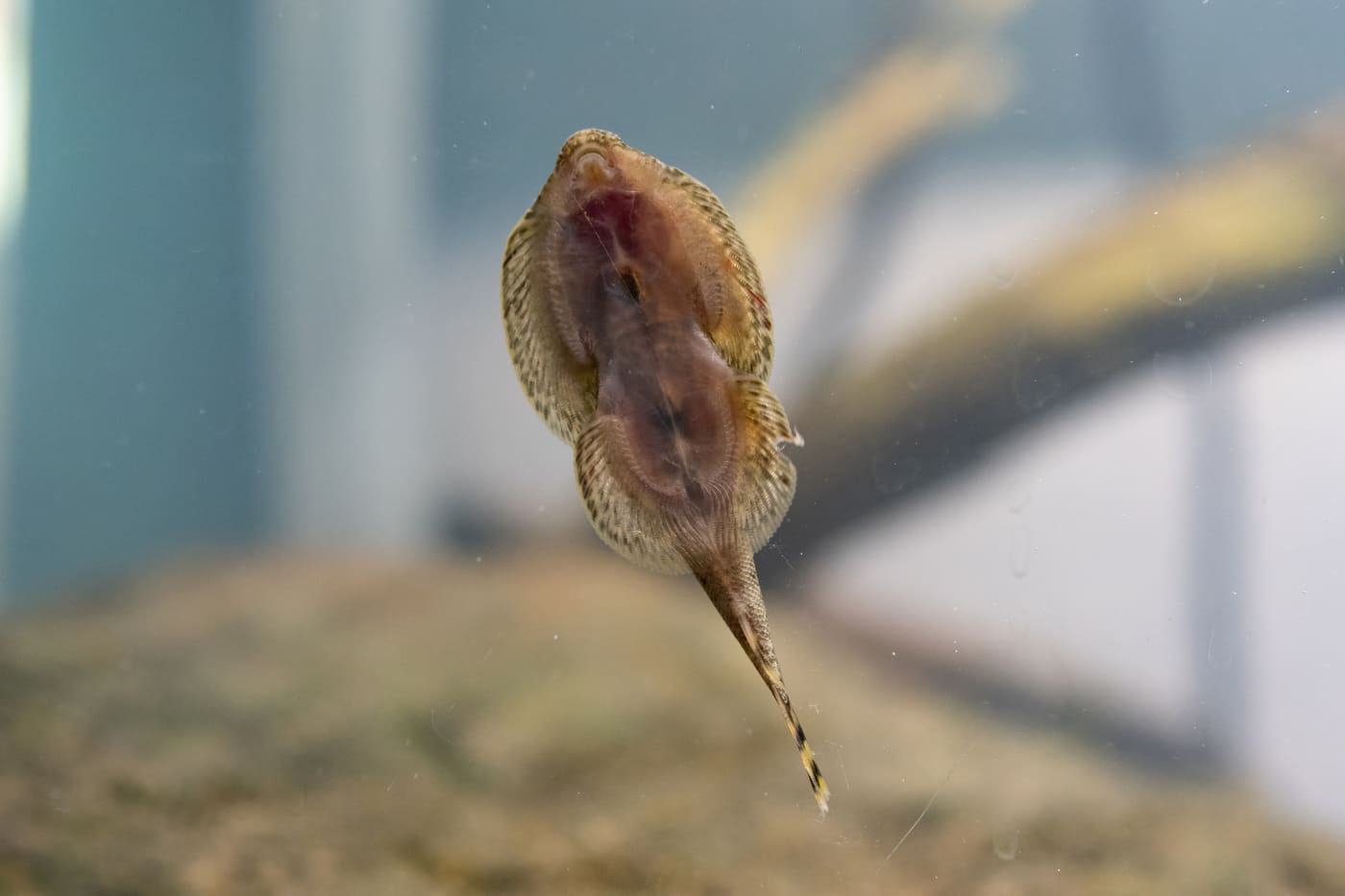
FishDifficulty: ●●●●Data: well-established
Butterfly Hillstream Loach — Beaufortia leveretti
📷 observe-syz (iNaturalist) · CC0 · resized · iNaturalist

About

The Butterfly Hillstream Loach is a flattened, disc-bodied fish from the fast, cool, oxygen-saturated streams of the Red and Pearl River systems in southern China, Hainan and northern Vietnam. Its fused, cupped pectoral and pelvic fins form a broad suction disc that turns the current into downforce rather than lift, so the fish holds station on bare rock in water that would sweep other species away, rasping algae and biofilm off the stone. It is sold at 2-3 cm next to the much smaller Sewellia and Gastromyzon hillstream loaches and is routinely assumed to stay that size, but Beaufortia leveretti is the largest of the three commonly traded hillstream loaches: it reaches 12 cm, and around 8 cm is a normal adult in the aquarium. That is the whole reason it needs a longer tank than its lookalikes — not more swimming volume, but more grazeable rock and enough length to run a river's worth of flow across the floor. Cool water, near-saturation oxygen and a mature, algae-covered hardscape are not optional; a bright, freshly set-up tank starves it.

Care

Reaches 12 cm — the largest hillstream loach in the trade — so plan on a 100 cm base and 120 L, not the 60 cm tank it is usually sold with. Give strong, laminar flow (10-15x turnover), cool 20-23°C water, near-saturation oxygen and smooth stones already carrying algae. Keep six or more and feed vegetable-based foods.

Diet

Aufwuchs grazer that rasps algae, diatoms and biofilm from rock; supplement with algae wafers, blanched courgette and spinach, and spirulina. Keep protein low — occasional frozen bloodworm at most. A tank too new or too clean to grow algae cannot feed this fish, and losses usually come months after purchase as slow starvation, not as an obvious illness.

Tankmate compatibility

Gets along with (27)

Possible with care (174)

Acei CichlidAfrican Butterfly CichlidAfrican ButterflyfishAgassiz's CoryAgassiz's Dwarf CichlidAssassin SnailAuratus CichlidBamboo ShrimpBanjo CatfishBlack Moor GoldfishBlack Neon TetraBlack Phantom TetraBlack Ruby BarbBlack Skirt TetraBlackline RasboraBleeding Heart TetraBlood Parrot CichlidBloodfin TetraBlue AcaraBlue Tiger ShrimpBoesemani RainbowfishBolivian RamBorleyi (Redfin Hap)Brevis Shell DwellerBrichard's TeleogrammaBrichardi (Fairy Cichlid)Bristlenose PlecoBronze CorydorasBuenos Aires TetraBumblebee GobyCalvus CichlidCelebes RainbowfishCheckered BarbCherry BarbChinese Algae EaterClown KillifishClown PlecoCochu's Blue TetraColombian Ramshorn SnailComet GoldfishCommon GoldfishCongo Dwarf CichlidCongo TetraConvict CichlidCylindricus CichlidCyprichromisDemasoni CichlidDogtooth CichlidDwarf Chain LoachDwarf Flag CichlidDwarf GouramiDwarf Neon RainbowfishDwarf Pea PufferDwarf Petricola CatfishDwarf RasboraElectric Yellow LabElephantnose FishEllioti CichlidElongate MbunaEmber TetraEmerald CoryEmperor TetraEndler's LivebearerEven-spotted SynodontisFantail GoldfishFeatherfin SqueakerFestivum (Flag Cichlid)Figure-8 PufferFiremouth CichlidFive-bar CichlidFlame TetraForktail RainbowfishGhost ShrimpGlass CatfishGolden Dwarf CichlidGolden JulieGolden PencilfishGolden TetraGolden Wonder KillifishGreen Neon TetraGreen TerrorGuppyHarlequin RasboraHead-and-Tail-Light TetraHoney GouramiHongi CichlidJack DempseyJewel CichlidJohanni CichlidJulii CoryKeyhole CichlidKissing GouramiLambchop RasboraLemon CichlidLemon TetraLittle CorydorasMacmasteri Dwarf CichlidMaingano CichlidMalaysian Trumpet SnailMarble HatchetfishMarlieri CichlidNeon TetraNerite SnailOcellatus Shell DwellerOranda GoldfishOtocinclusPanda CorydorasParadise FishParaguay EartheaterPeaceful BettaPeacock CichlidPenguin TetraPictus CatfishPlatyPolka Dot LoachPort CichlidPowder Blue CichlidPurple Emperor TetraPygmy CorydorasRabbit SnailRainbow CichlidRainbow SharkRanchu GoldfishRed DevilRed EmpressRed RainbowfishRed Whiptail CatfishRed-Tail SharkRegan's JulieRosy Red MinnowRummynose TetraRusty CichlidRyukin GoldfishSalt and Pepper CorySalvini CichlidSand-sifting XenotilapiaSaulosi CichlidScarlet BadisScissortail RasboraSerpae TetraSeverumShubunkin GoldfishSiamese Algae EaterSilver Tip TetraSimilis Shell DwellerSkunk CorySparkling GouramiSpotted HoploStar SapphireSterbai CorydorasStrawberry RasboraStriped KribensisStriped Raphael CatfishSunshine PeacockSveni EartheaterSwordtailT-Bar CichlidTelescope GoldfishTexas CichlidThai Micro CrabThick-lipped GouramiThreadfin PetrochromisThreadfin RainbowfishTiger BarbTurquoise RainbowfishUmbrella Dwarf CichlidUpside-down CatfishVampire ShrimpVenezuelan CoryVenustus (Giraffe Cichlid)Wrestling HalfbeakX-ray TetraYoyo LoachZebra Mbuna

Avoid (70)

Computed by the AquaSage engine for a spacious reference tank — always check the full verdict for your exact setup in the calculator.

Telling males from females

What works for this species, most reliable first.

  • Adult sizeA hint only · only across animals of the same age

    In many cichlids, catfish and loaches one sex simply grows larger — usually the male, though there are well-known reversals.

All the methods, with diagrams

Also in these lists

Frequently asked questions

What tank size does a Butterfly Hillstream Loach need?
A Butterfly Hillstream Loach needs an aquarium of at least 120 litres (31.7 US gallons) with a footprint at least 100 cm (39.4 in) long — for this species, swimming length matters as much as raw volume.
What water parameters does a Butterfly Hillstream Loach need?
Butterfly Hillstream Loach does best at 18–24 °C (64.4–75.2 °F), pH 6.5–8 and a general hardness of 4–15 °dGH.
What group size does a Butterfly Hillstream Loach need?
Butterfly Hillstream Loach is a social species — keep a group of at least 6 so natural behaviour emerges and stress stays low.
Is the Butterfly Hillstream Loach suitable for beginners?
Butterfly Hillstream Loach is a demanding species best attempted with some experience — it needs stable, closely watched conditions to thrive.

Sources

Water & tank

Temperature18–24°C
Optimal temp.20–23°C
pH6.5–8
Hardness (GH)4–15°d
Carbonate (KH)3–10°d
Adult size12 cm
Min. volume≥ 120 L
Min. tank length≥ 100 cm
Group size≥ 6
Swimming zoneBottom
TemperamentPeaceful
Water typeFreshwater
FlowStrong
Lifespan~8 yrs
Try in the calculator