AquaSage
Species library

Bladder Snail

Physella acuta

Physidae
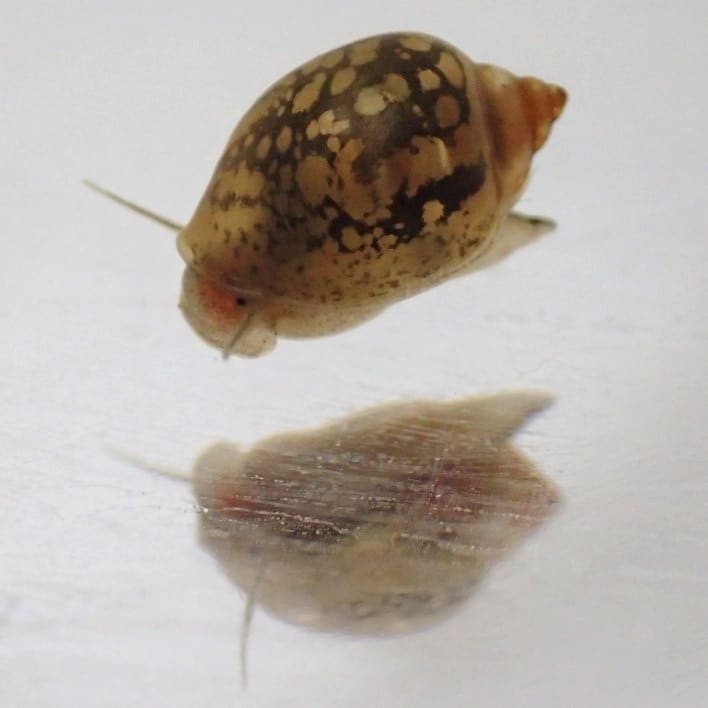
InvertsDifficulty: ○○○○Data: well-established
Bladder Snail — Physella acuta
📷 Juliette Tariel · CC BY-SA 4.0 · resized · Wikimedia Commons

About

The bladder snail is a tiny, teardrop-shaped freshwater snail with a thin, translucent, left-coiling shell, and is one of the most widespread and hardy gastropods on the planet. It usually arrives uninvited as a hitchhiker on plants or decor, then quietly works as a cleanup crew, rasping algae, biofilm and detritus from every surface. As a self-fertilising hermaphrodite it can breed explosively in a well-fed tank, which is why it is often labelled a pest despite being completely harmless to fish, shrimp and healthy plants.

Care

Practically indestructible and undemanding across almost any freshwater conditions, including warm or poorly oxygenated water it can breathe air to survive. Controls its own population through feeding, so keep feeding modest; harmless and plant-safe but highly sensitive to copper.

Diet

Omnivorous grazer feeding on soft algae, diatoms, biofilm, detritus and decaying leaves, plus any uneaten fish food. No supplemental feeding is required; the colony size simply tracks the available food supply.

Tankmate compatibility

Gets along with (40)

Possible with care (171)

Acei CichlidAfrican Butterfly CichlidAgassiz's Dwarf CichlidAuratus CichlidBanjo CatfishBetta (Siamese Fighting Fish)Black Neon TetraBlack Phantom TetraBlack Ruby BarbBlack Skirt TetraBlackline RasboraBleeding Heart TetraBlood Parrot CichlidBlue AcaraBlue Dolphin CichlidBlue Tiger ShrimpBoesemani RainbowfishBolivian RamBorleyi (Redfin Hap)Borneo SuckerBrevis Shell DwellerBrichard's TeleogrammaBrichardi (Fairy Cichlid)Bronze CorydorasBuenos Aires TetraBuffalohead CichlidBumblebee CichlidBumblebee GobyCelebes RainbowfishCheckerboard CichlidCheckered BarbCherry BarbChili RasboraChocolate CichlidClown KillifishClown PlecoCobalt Blue ZebraCochu's Blue TetraCockatoo Dwarf CichlidColombian Ramshorn SnailCongo Dwarf CichlidCongo TetraConvict CichlidCrystal Red ShrimpCylindricus CichlidCyprichromisDemasoni CichlidDenison BarbDiamond TetraDiscusDoctor FishDogtooth CichlidDojo (Weather) LoachDuboisi TropheusDwarf Chain LoachDwarf Flag CichlidDwarf GouramiDwarf Neon RainbowfishDwarf Petricola CatfishDwarf RasboraElectric Yellow LabElephantnose FishEllioti CichlidElongate MbunaEmber TetraEmerald CoryEmperor TetraEven-spotted SynodontisFestivum (Flag Cichlid)Firemouth CichlidFive-bar CichlidFlame TetraGerman Blue RamGlass CatfishGlowlight TetraGoby CichlidGolden Dwarf CichlidGolden JulieGolden PencilfishGolden TetraGreen DiscusGreen Neon TetraHarlequin RasboraHead-and-Tail-Light TetraHeckel DiscusHoney GouramiHongi CichlidJohanni CichlidJulii CoryKenyi CichlidKeyhole CichlidKissing GouramiKribensisKuhli LoachLambchop RasboraLemon CichlidLemon TetraLittle CorydorasMacmasteri Dwarf CichlidMaingano CichlidMarble HatchetfishMarlieri CichlidMasked JulieMedaka RicefishMollyMoonlight GouramiMultifasciatus Shell DwellerNeon TetraOcellatus Shell DwellerOtocinclusPanda CorydorasParaguay EartheaterPeaceful BettaPeacock CichlidPearl GouramiPenguin TetraPeppered CorydorasPolka Dot LoachPort CichlidPowder Blue CichlidPurple Emperor TetraPygmy CorydorasRabbit SnailRainbow CichlidRainbow SharkRed EmpressRed RainbowfishRed Whiptail CatfishRed Zebra CichlidRed-Tail SharkRedhead CichlidRegan's JulieRosy BarbRosy TetraRummynose TetraRusty CichlidSailfin MollySalt and Pepper CorySand-sifting XenotilapiaSaulosi CichlidScissortail RasboraSerpae TetraSeverumSiamese Algae EaterSimilis Shell DwellerSkunk CorySparkling GouramiStar SapphireSterbai CorydorasStrawberry RasboraStriped KribensisSulawesi Cardinal ShrimpSunshine PeacockSveni EartheaterSwordtailT-Bar CichlidTaiwan Reef CichlidThick-lipped GouramiThreadfin AcaraThreadfin PetrochromisThreadfin RainbowfishThree-spot GouramiTropheusTurquoise RainbowfishUaru (Triangle Cichlid)Umbrella Dwarf CichlidUpside-down CatfishWhite Cloud Mountain MinnowYoyo LoachZebra MbunaZebra Pleco

Avoid (60)

Computed by the AquaSage engine for a spacious reference tank — always check the full verdict for your exact setup in the calculator.

Telling males from females

There is no reliable way to sex this species by eye. That is the honest answer, not a gap in our data.

All the methods, with diagrams

Also in these lists

Frequently asked questions

What tank size does a Bladder Snail need?
A Bladder Snail needs an aquarium of at least 10 litres (2.6 US gallons) with a footprint at least 20 cm (7.9 in) long — for this species, swimming length matters as much as raw volume.
What water parameters does a Bladder Snail need?
Bladder Snail does best at 15–30 °C (59–86 °F), pH 6.5–8.5 and a general hardness of 3–25 °dGH.
What group size does a Bladder Snail need?
Bladder Snail is a social species — keep a group of at least 2 so natural behaviour emerges and stress stays low.
Is the Bladder Snail suitable for beginners?
Yes — Bladder Snail is one of the easier species to keep and forgives typical first-tank mistakes, as long as the aquarium is cycled and maintained.

Sources

Water & tank

Temperature15–30°C
Optimal temp.20–26°C
pH6.5–8.5
Hardness (GH)3–25°d
Carbonate (KH)1–18°d
Adult size1.5 cm
Min. volume≥ 10 L
Min. tank length≥ 20 cm
Group size≥ 2
Swimming zoneAll levels
TemperamentPeaceful
Water typeFreshwater
FlowLow
Lifespan~1 yrs
Try in the calculator