Fish diseases
A sick fish does not announce its diagnosis — you only see a sign. So everything here is organised by what you see in the tank, and every entry says what it gets confused with, what separates them, and which mistake kills most often.
Water first
In a young tank, most “disease” is not disease — it is ammonia or nitrite poisoning, and no medicine treats that. Before buying anything, test ammonia, nitrite and nitrate. If you keep the cycle log, the answer is already there.
New tank syndromeWhite spots or film
The three most-confused conditions demand opposite actions — see what separates them before doing anything.
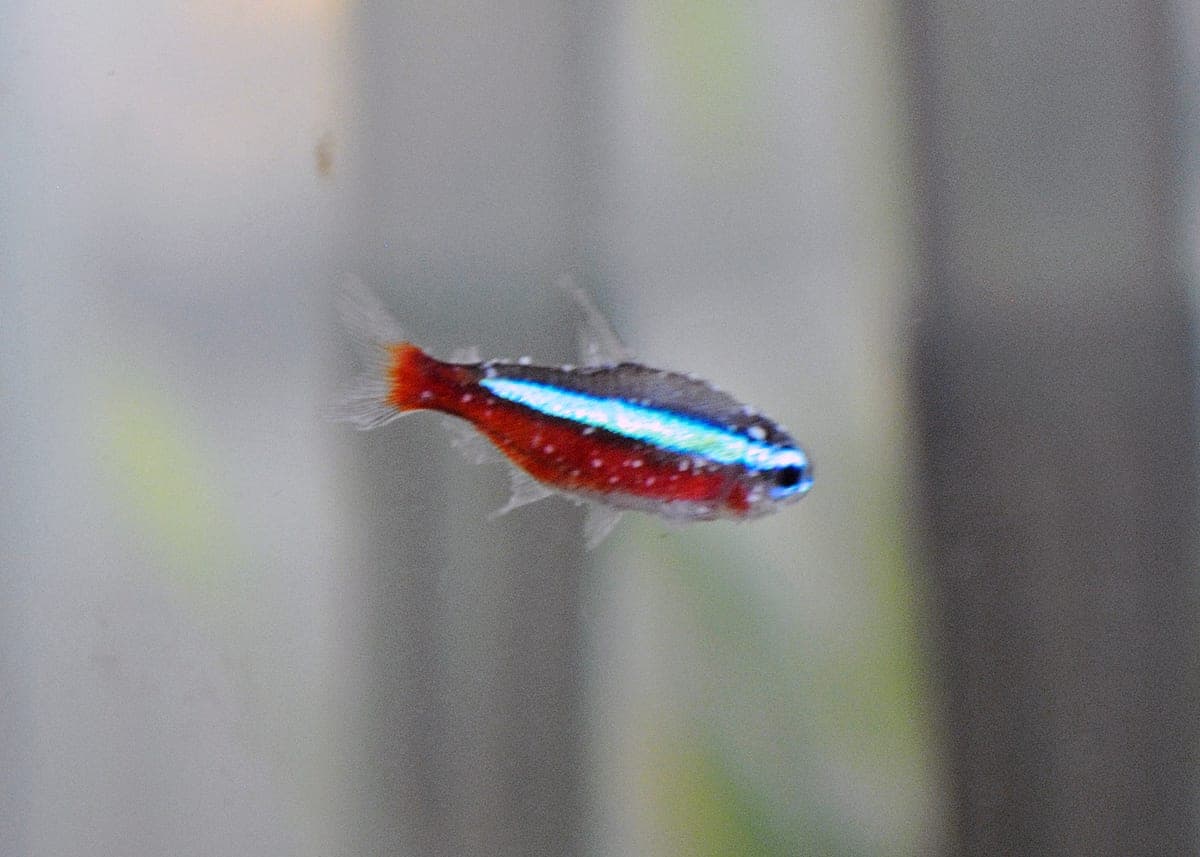
White spot (ich)
Treat nowDiscrete white spots of about 1 mm, like grains of salt or semolina, scattered over the body and fins. Fish rub against decor, clamp their fins and later gasp — the parasite hits the gills hardest, so a fish can be suffocating while only a few spots show on the skin.
Read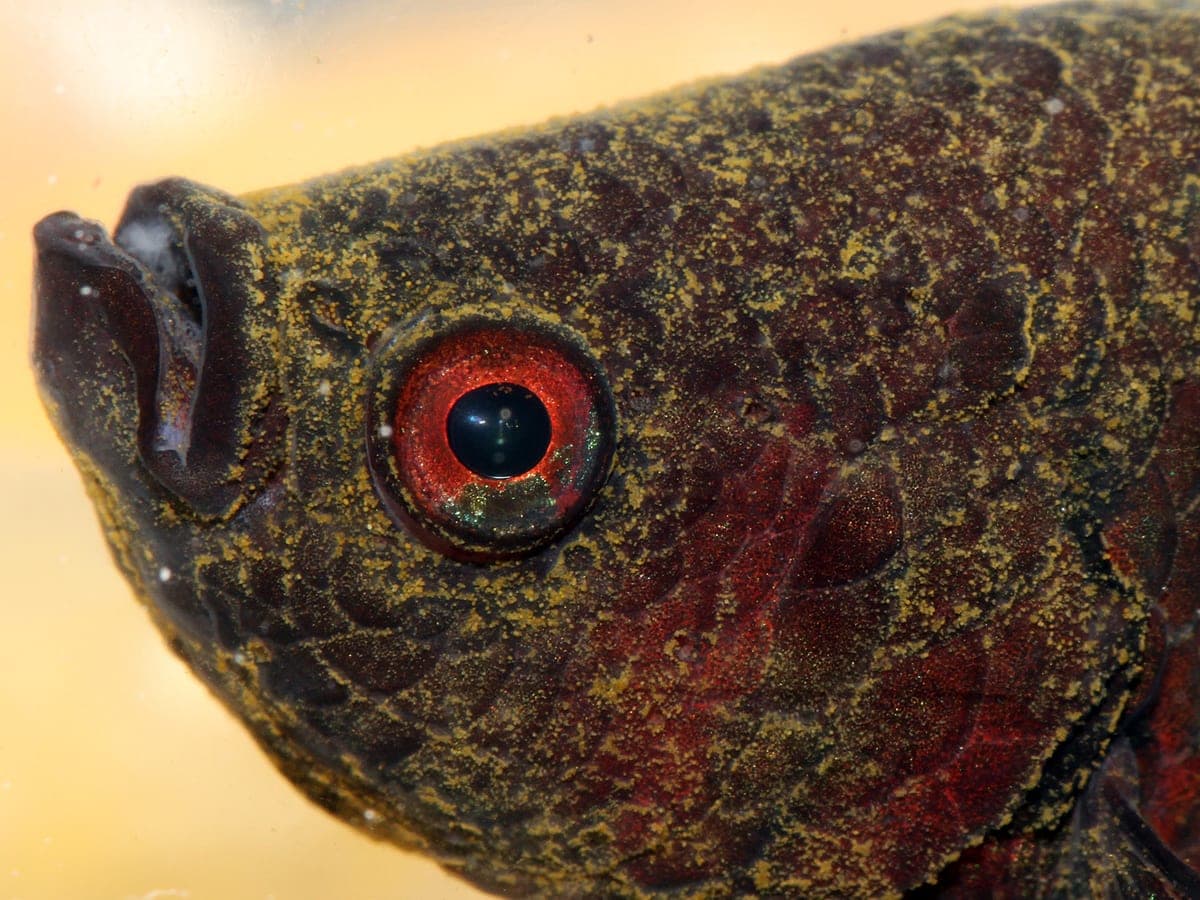
Velvet (oodinium)
Treat nowA yellowish-rust film like gold dust over the skin, gills and fins — much finer than white grains. It shows best in the dark under a flashlight held at an angle. Fish rub against objects, clamp their fins and start labouring for breath early, because the parasite attacks the gills first.
ReadColumnaris
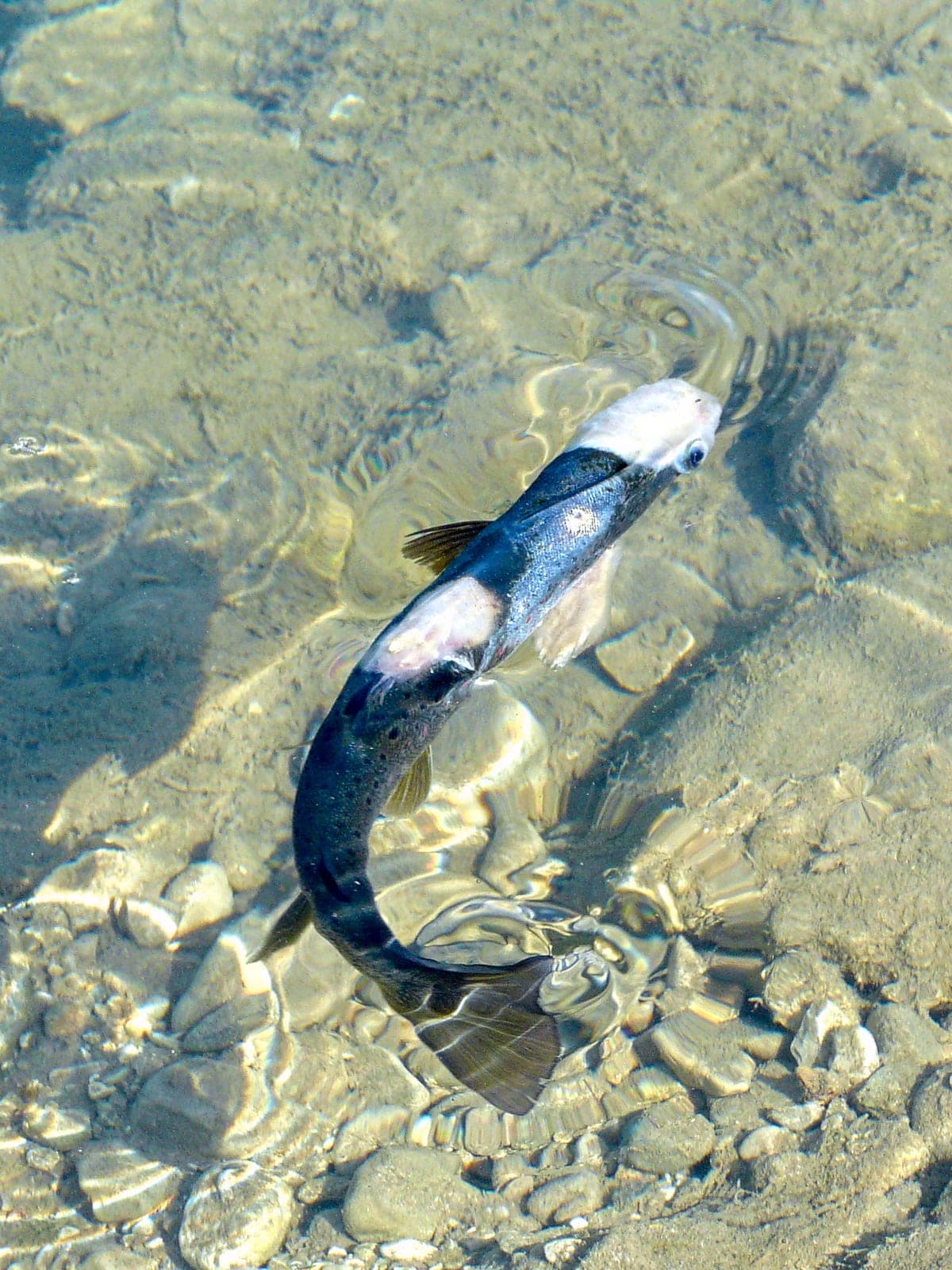
UrgentFlat, pale patches, often with a yellowish or tan tinge, where the skin loses its shine — around the mouth, along the back (the classic saddle-shaped band at the dorsal fin), on fin edges and gills. A cottony growth can form around the mouth. It spreads fast — sometimes within a day or two.
ReadFuzzy or cottony growth
True fungus and a bacterial infection look alike, but antifungals do nothing against bacteria — the shape and the speed tell them apart.
Swollen belly or raised scales
From harmless overfeeding to organ failure — the separator is the scales: lying flat, or standing out like a pinecone.
Constipation and overfeeding
WatchA swollen belly, but the scales lie FLAT and the fish stays active and keeps begging for food. Most often after generous feeding with dry food. Females in breeding season fill out naturally — symmetrically, with no other signs.
Read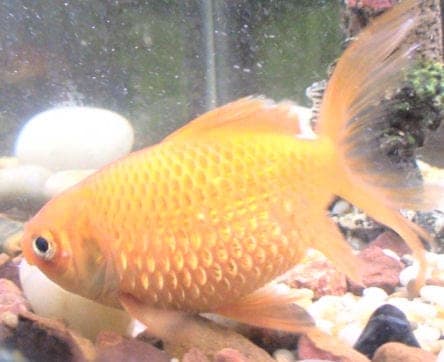
Dropsy
UrgentA swollen body with scales standing out — seen from above, the fish looks like a pinecone. Bulging eyes sometimes join it, and the fish turns listless and stops eating. The photo shows a goldfish with its scales lifted off the body.
ReadMycobacteriosis (fish tuberculosis)
UrgentA slow disease unfolding over weeks and months: the fish wastes away despite eating, the back hollows, the belly may swell on an already thin fish, non-healing ulcers appear, paleness, sometimes a bent spine. Fins can crumble too — older literature calls it “false fin rot.”
ReadRagged or melting fins
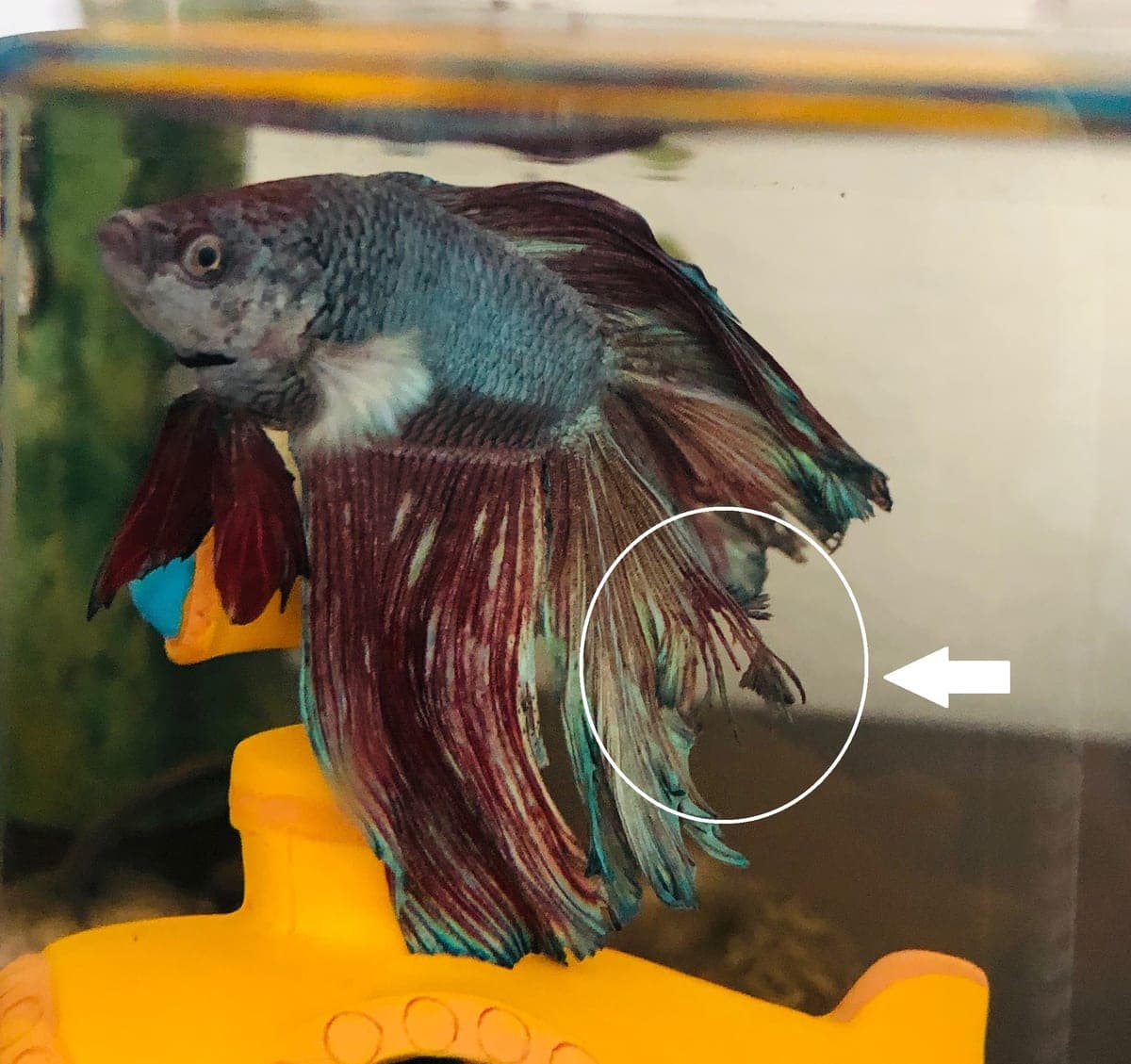
Rot, nipping tankmates and water burns each leave different edges — and demand different responses.
This reference helps you recognise and tell conditions apart — it does not make the diagnosis. Only a microscope or a veterinarian confirms one. Use medicines exactly per the label, ideally in a quarantine tank, because several of them kill filter bacteria.