Velvet (oodinium)
Treat nowParasitePiscinoodinium pillulare
Also called: Gold dust disease, Rust disease, Oodiniosis
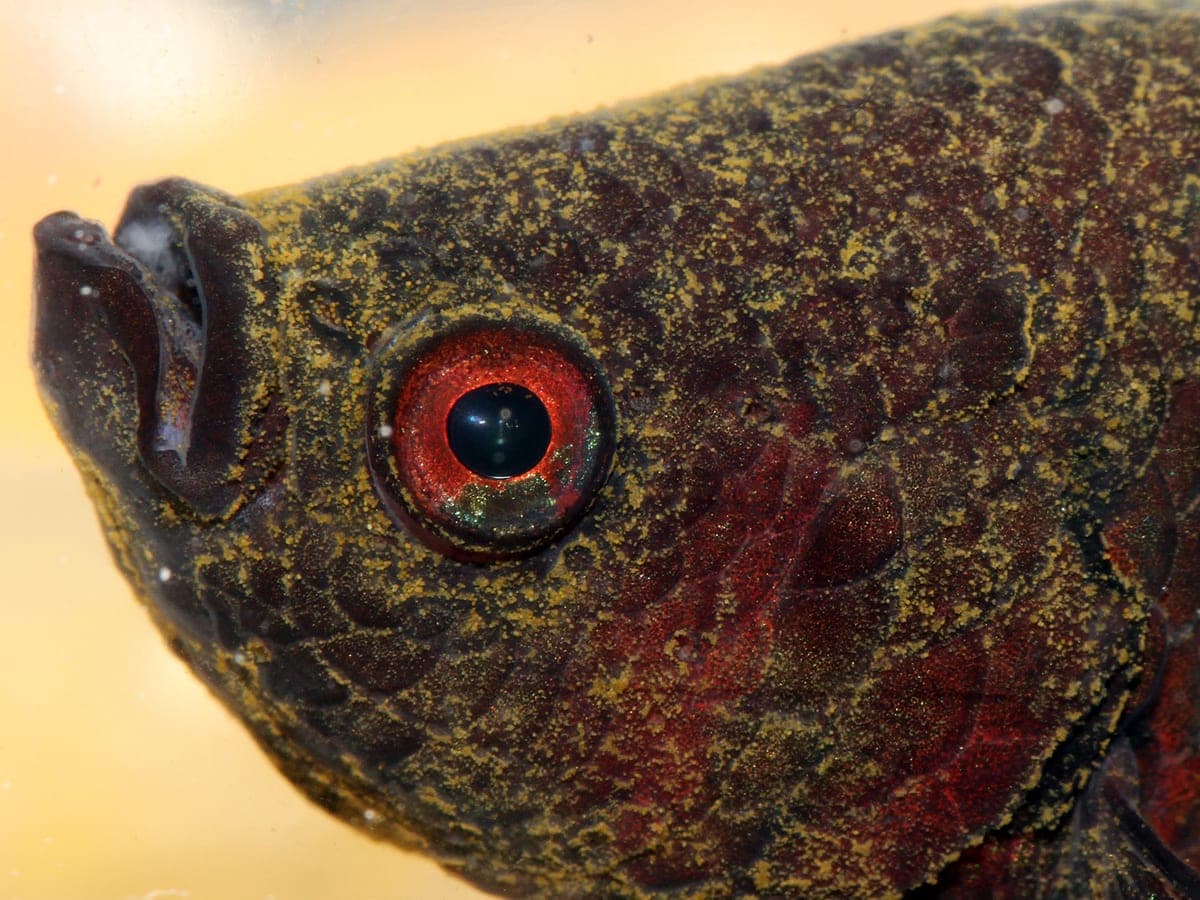
What you see
A yellowish-rust film like gold dust over the skin, gills and fins — much finer than white grains. It shows best in the dark under a flashlight held at an angle. Fish rub against objects, clamp their fins and start labouring for breath early, because the parasite attacks the gills first.
How to tell it from its look-alikes
The separator from ich is grain size: velvet is dust-fine with a gold or rust tint, while ich forms discrete white grains. Rubbing (flashing) is common to both, so it separates nothing. When unsure, use a flashlight in a dark room — a dust sheen glitters, grains stay as dots.
The dangerous mistake
Waiting for clear spots. Velvet damages the gills before the film is easy to see on the body, so a fish that is gasping and rubbing can be heavily infected with no visible “velvet” at all. Delay costs the most here.
Water first
In a young tank, most “disease” is not disease — it is ammonia or nitrite poisoning, and no medicine treats that. Before buying anything, test ammonia, nitrite and nitrate. If you keep the cycle log, the answer is already there.
New tank syndromeWhat to do
Dim or switch off the tank lights during treatment — this parasite photosynthesises, and darkness weakens it. Treat the whole tank with a skin-parasite medicine for the full labelled course. Increase aeration, since damaged gills take up less oxygen, and test the water — fish stressed by ammonia give in to the parasite sooner.
What to expect
Caught early, it is treatable. In the late stage, once the gills are heavily damaged, fish die even under treatment — juveniles are the most vulnerable.
This reference helps you recognise and tell conditions apart — it does not make the diagnosis. Only a microscope or a veterinarian confirms one. Use medicines exactly per the label, ideally in a quarantine tank, because several of them kill filter bacteria.