Guppy Grass
Najas guadalupensis
Hydrocharitaceae
About
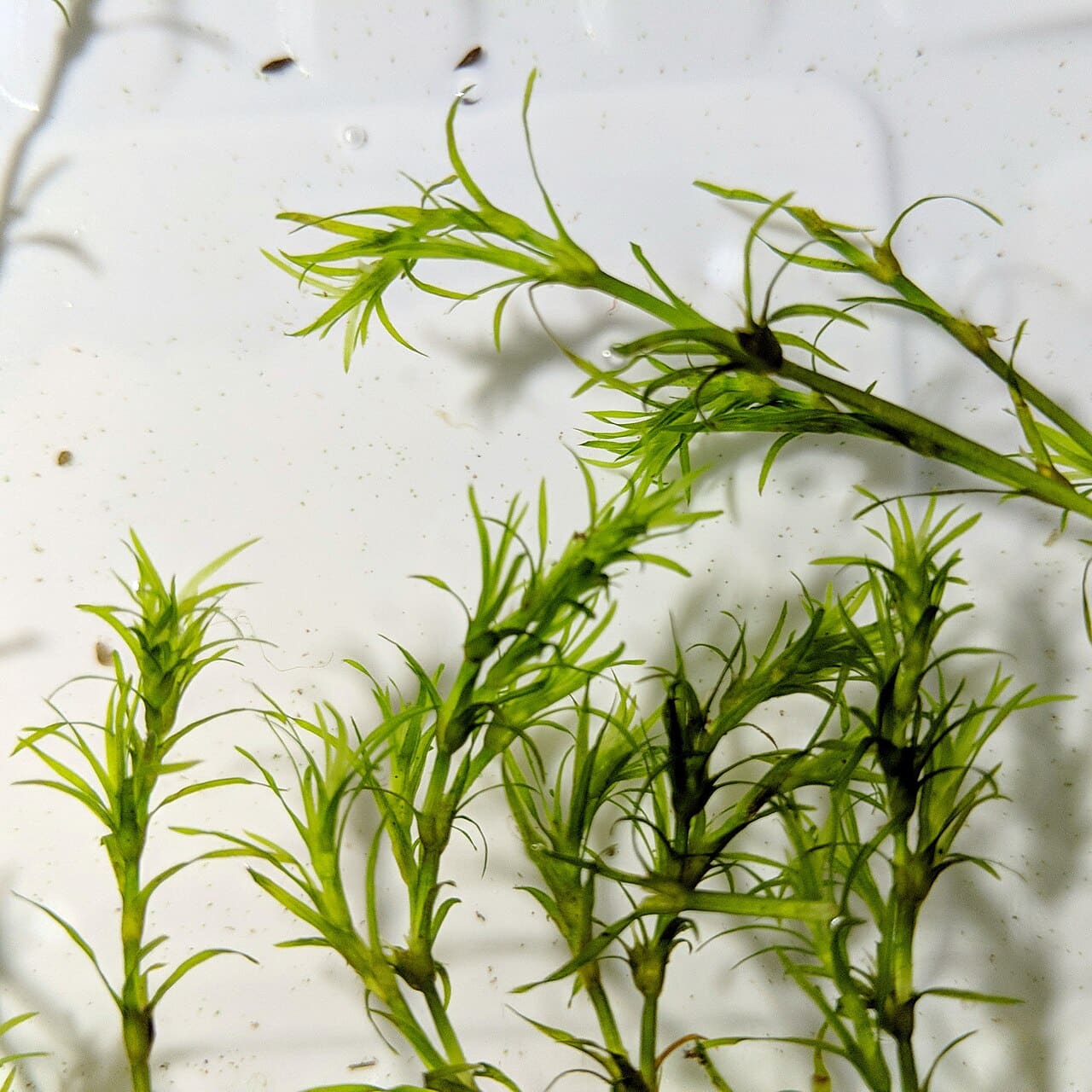
Guppy grass earned its name in breeding tanks: brittle, freely branching stems carry tufts of narrow, finely toothed leaves that interlock into a mass adult fish cannot swim through, so fry survive where they would normally be eaten. Native across North and South America, it grows either rooted in the substrate or, far more often, as a drifting bundle near the surface. It is one of the fastest nutrient sponges available to a freshwater tank, needs no CO2 and no special lighting, and shatters at the slightest handling — which is exactly how it propagates.
Care
Drop a handful in and leave it; it will double in a few weeks under almost any light. Keep flow gentle, because the stems break apart, and thin the mass regularly before it fills the tank and shades everything below.
Diet
A water-column feeder that pulls nitrate down fast in a new or overstocked tank; goldfish, cichlids and livebearers graze it readily, so treat it as a consumable in those setups.
Also in these lists
Frequently asked questions
- What water parameters does a Guppy Grass need?
- Guppy Grass does best at 15–30 °C (59–86 °F), pH 6–8.5 and a general hardness of 2–25 °dGH.
- Where should Guppy Grass be placed in the aquarium?
- Guppy Grass works best floating at the surface and reaches around 100 cm.
- Is the Guppy Grass suitable for beginners?
- Yes — Guppy Grass is one of the easier species to keep and forgives typical first-tank mistakes, as long as the aquarium is cycled and maintained.